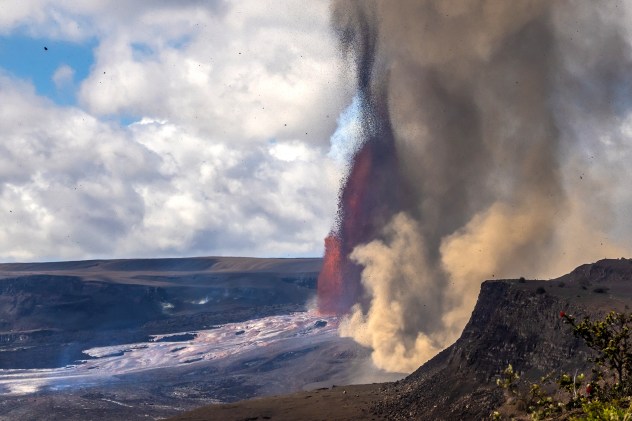
KÄ«lauea's March 10 eruption sent inches to nearly 1 foot of tephra raining down on parts of Hawaii Volcanoes National Park, burying overlooks, roads and grassy areas under volcanic rock, ash and glass.
The eruption began Tuesday morning and lasted nine hours. Lava fountains soared as high as 1,300 feet, producing widespread tephra fall across the summit, onto Highway 11 and into nearby communities.
| Episode 43 lava fountains, plume and tephra fallout from the Kilauea overlook area on March 10, 2026, in Hawaii Volcanoes National Park. (Image: NPS) |
How much tephra fell at Hawaiʻi Volcanoes National Park?
| Tephra cleanup on Crater Rim Drive West (left) and (right) benches and the viewing platform at UÄ?kahuna are blanketed in tephra in Hawaii Volcanoes National Park on March 11, 2026. (Image: NPS) |
According to National Park Service rangers, the heaviest tephra accumulation was recorded at UÄkahuna overlook, the former Jaggar Museum site. Officials measured about 4-7 inches of buildup there. In portions of the overlook and parking lot, deposits reached up to 1 foot deep, prompting closures.
Photos from the NPS show benches and viewing platforms completely blanketed in gray fallout. Areas that were grassy days earlier - including sections near Kilauea Military Camp - were covered.
| In Volcano Village, located northeast of the eruptive vents at the summit of KÄ«lauea, in Hawaii Volcanoes National Park, fallout from episode 43 was less extensive than the areas to the west. This photograph shows a parking area that nearly continuously covered with tephra particles ranging up to a couple inches in diameter. (Image: USGS) |
What is tephra?
| Microscopic images of Pele's hair and ash deposited in Hilo during KÄ«lauea's episode 43 fountains on March 10, 2026. (Image credit: UHH/USGS photo by L. Gallant.) |
Tephra is fragmented volcanic material - including ash, rock and strands of volcanic glass - blasted into the air during an eruption. While often light and airy, it can accumulate quickly during powerful lava fountains like those seen in this episode.
Tephra can irritate the eyes and lungs. Park officials advise visitors to drive slowly, as wind and traffic can remobilize small particles and obscure road markings. Visitors are also urged to consider wearing eye protection, a dust mask, long sleeves, pants and sturdy closed-toe shoes.
Officials say cleanup will take time due to the volume of material that fell during the nine-hour eruption.
Visitors are encouraged to check the Hawaiʻi Volcanoes National Park website for the latest updates as recovery efforts continue.