Ukraine’s military has reported using a domestically developed directed-energy weapon to intercept enemy drones, a disclosure that could reshape how smaller nations defend against cheap, mass-produced aerial threats. The system, identified as the Tryzad laser, was announced alongside broader efforts to build an international electronic warfare coalition and secure additional air defense support. If the claims hold up under independent scrutiny, the deployment would represent one of the first confirmed battlefield uses of laser-based drone defense outside of testing environments run by major military powers.
What Ukraine Says the Tryzad Can Do
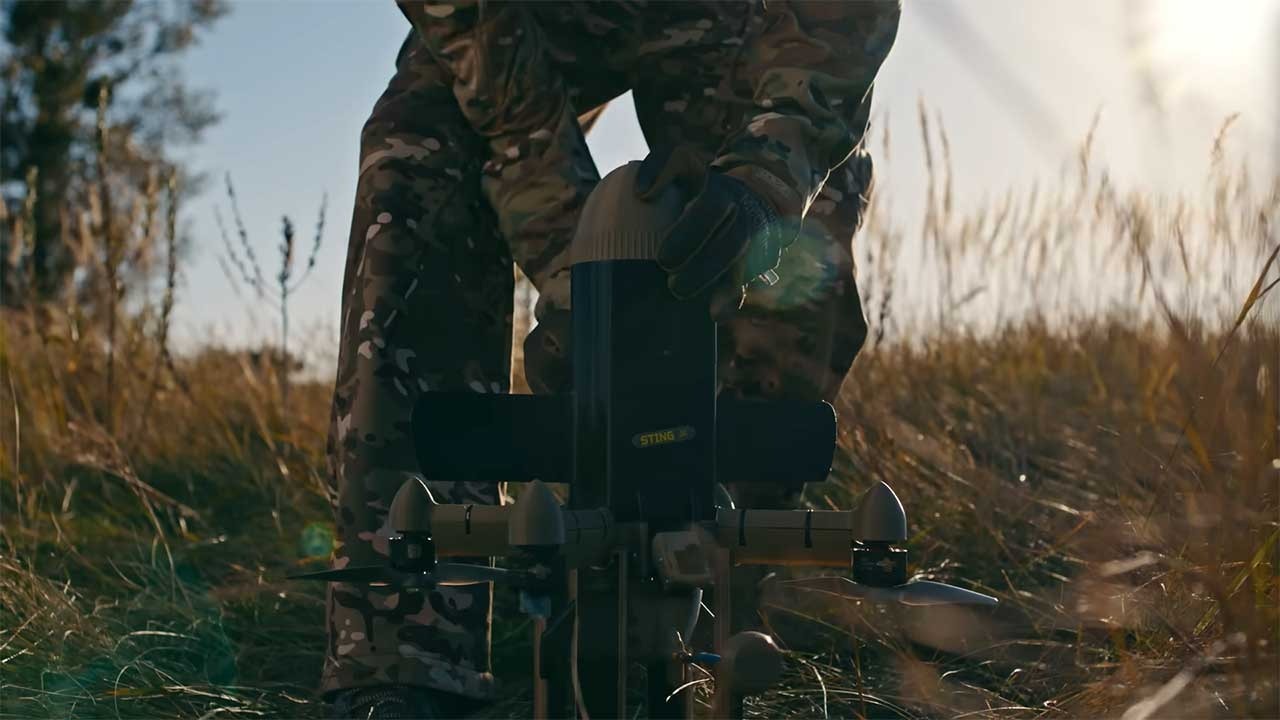
According to statements from Ukraine’s defense ministry, the Tryzad is a high-powered laser system designed to destroy unmanned aerial vehicles. The ministry announced the system as part of a package that also included the formation of an electronic warfare coalition and expanded air defense cooperation with partner nations. The simultaneous rollout of all three initiatives suggests Kyiv is framing the Tryzad not as a standalone gadget but as one layer in a broader, integrated defense strategy against persistent Russian drone campaigns.
The core appeal of a directed-energy weapon in this context is cost. Traditional surface-to-air missiles can cost tens of thousands to hundreds of thousands of dollars per shot, while the drones they target, particularly Iranian-designed Shahed-type loitering munitions, are far cheaper to produce. A laser system that runs on electricity rather than expendable munitions could, in theory, flip that cost equation. Each shot would cost a fraction of what a missile intercept requires, and the system would not run out of ammunition as long as it has power and a functioning cooling system.
That said, the Ukrainian ministry has not released detailed technical specifications for the Tryzad. Key questions remain unanswered: the laser’s effective range, its power output, the time required to disable a target, and whether the system can operate reliably in adverse weather conditions such as fog, rain, or heavy cloud cover, all of which degrade laser performance. It is also unclear how mobile the system is, whether it is truck-mounted or fixed, and how it is integrated with existing radar and command-and-control networks. Without those details, the announcement functions more as a strategic signal than a technical proof of concept.
Why Directed Energy Matters for Drone Defense
The war in Ukraine has turned into the largest real-world laboratory for drone warfare since the technology became widely available. Both sides have deployed thousands of unmanned systems for reconnaissance, strike missions, and area denial. Russia’s use of one-way attack drones to target Ukrainian energy infrastructure and military positions has been relentless, and Ukraine’s conventional air defenses have been stretched thin trying to counter them while also conserving missiles for higher-end threats like cruise and ballistic missiles.
This is the problem that directed-energy weapons are theoretically built to solve. Missiles are finite and expensive. Laser systems, by contrast, offer a “deep magazine” that does not deplete with each engagement. As long as the platform can generate and store sufficient electrical power, it can keep firing. The United States, Israel, and several European nations have been developing similar technology for years, testing laser interceptors against small drones, rockets, and mortar rounds. Naval trials have demonstrated that lasers can burn through lightweight airframes at tactically relevant ranges under controlled conditions.
If Ukraine has genuinely fielded a working laser weapon against incoming drones, it would be among the first publicly acknowledged cases of directed energy being used in active combat by a nation that is not a top-tier military spender. That distinction matters because it suggests the technology may be maturing faster than many defense analysts expected, and at price points accessible to countries without massive defense budgets. It would also indicate that at least some of the practical hurdles around beam control, target tracking, and battlefield integration can be overcome outside of highly resourced Western laboratories.
The Electronic Warfare Coalition Angle
The Tryzad announcement did not arrive in isolation. Ukraine simultaneously disclosed plans for an international electronic warfare coalition, a move that signals Kyiv’s recognition that jamming, spoofing, and disabling enemy drones electronically is just as important as physically destroying them. Electronic warfare and directed-energy weapons serve complementary roles: EW systems can confuse or redirect drones by interfering with their navigation and communications links, while lasers can destroy those that get through the electronic screen or operate autonomously.
Building a coalition around electronic warfare also serves a diplomatic purpose. It creates a framework for Western allies to contribute technology, training, and intelligence without necessarily committing additional missile systems, which remain in short supply globally. For NATO members already stretched by their own defense modernization timelines, supporting an EW coalition may be a lower-cost, lower-profile way to bolster Ukraine’s defenses. Contributions could range from software-defined radios and signal analysis tools to joint training programs that help Ukrainian operators better identify and counter new Russian drone control protocols.
The coalition concept also reflects a hard lesson from the battlefield. Ukraine’s forces have learned that no single defensive layer is sufficient against the volume and variety of drone threats Russia employs. Small quadcopters, larger fixed-wing systems, and long-range loitering munitions each present different signatures and vulnerabilities. A layered approach, combining electronic jamming, kinetic intercepts, and now potentially laser systems, offers better odds of protecting critical infrastructure and frontline positions. The open question is whether partner nations will contribute meaningful capability and sustained funding, or whether the coalition remains largely symbolic and fragmented across national procurement lines.
What Independent Verification Is Missing
The most significant gap in this story is the absence of independent confirmation. No international observers, allied governments, or open-source intelligence analysts have publicly corroborated the Tryzad’s claimed intercepts. Satellite imagery, battle damage assessments, or third-party technical evaluations have not surfaced. The claims rest entirely on statements from the Ukrainian defense ministry, which, like any wartime government, has strategic incentives to project strength and technological capability to both domestic and foreign audiences.
This does not mean the claims are false. Wartime secrecy around new weapons systems is standard practice, and Ukraine has legitimate reasons to limit what it reveals about the Tryzad’s capabilities, vulnerabilities, and deployment locations. Revealing too much could allow Russia to adapt its tactics, alter flight profiles, or concentrate attacks where the system is absent. But the lack of corroborating evidence does mean that outside analysts should treat the announcement with calibrated skepticism. Directed-energy weapons have a long history of overpromising in development and underdelivering in the field. Atmospheric conditions, power supply logistics, thermal management, and target acquisition speed all present engineering challenges that press releases tend to gloss over.
Russia, for its part, has not publicly commented on the Tryzad or acknowledged any drone losses attributable to laser weapons. The absence of a Russian response is itself ambiguous: it could mean the system has not had a meaningful operational impact, or it could mean Moscow is choosing not to draw attention to a new Ukrainian capability that might influence its own procurement debates. Until independent imagery or on-the-ground reporting emerges, the Tryzad will sit in a gray zone between promising innovation and unverified claim.
Broader Implications for Global Defense Spending
Regardless of whether the Tryzad performs as advertised, its announcement is likely to accelerate interest in affordable directed-energy systems among mid-tier military powers. The proliferation of cheap drones has created a strategic imbalance that traditional air defense was not designed to address. Countries facing drone threats from non-state actors or regional rivals are watching the Ukraine conflict closely for lessons about what works in practice rather than on PowerPoint slides.
If laser-based drone defense proves viable at a reasonable cost, it could reshape procurement priorities. Defense ministries might divert funds from additional missile batteries toward research, development, and rapid prototyping of directed-energy platforms. Industry, seeing a potential export market among states that cannot afford high-end missile systems in large numbers, would have an incentive to offer scaled-down, modular lasers suitable for base defense, border security, and protection of critical infrastructure like oil facilities and power plants.
At the same time, the Tryzad story is a reminder that technology alone will not resolve the drone threat. Even an effective laser system is only as useful as the radar, sensors, and command networks that cue it to targets, and it may be limited by weather and line-of-sight constraints. Adversaries can respond by hardening airframes, flying in swarms to saturate defenses, or shifting to different attack vectors such as low-flying cruise missiles. For Ukraine and other nations contemplating similar investments, the challenge will be to integrate directed energy into a broader, adaptable air defense ecosystem rather than treat it as a silver bullet.
For now, the Tryzad remains both a symbol and a test case. It symbolizes Ukraine’s push to innovate under fire and to signal to partners that it can absorb and field advanced technologies. It is also a test of whether directed-energy weapons are finally ready to move from demonstration ranges into the messy, unpredictable reality of modern war. As evidence accumulates, or fails to, the outcome will influence not only Ukraine’s defensive posture but also how militaries worldwide think about the balance between old-fashioned missiles and the promise of light-speed intercepts.
More from Morning Overview
*This article was researched with the help of AI, with human editors creating the final content.