
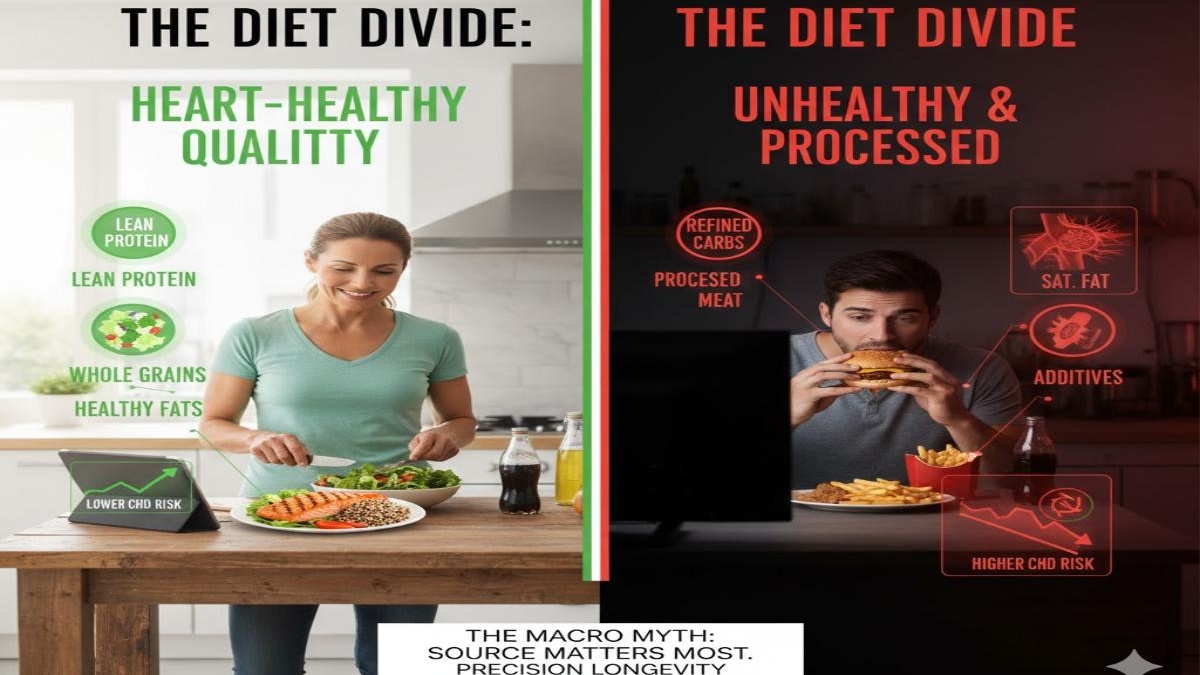
For decades, the fitness and wellness community in the United States has been deeply divided, with one camp championing low-carbohydrate lifestyles like Keto and Paleo, while the other defends low-fat, grain-forward regimens. As a health specialist, I have watched clients agonize over these ratios, often missing the forest for the trees. A massive new study published in the prestigious journal JACC has finally provided a definitive answer: both low-carb and low-fat diets can be heart-healthy, provided they are constructed from high-quality, whole-food sources.
The research, which meticulously followed nearly 200,000 U.S. adults over three decades, found that the "quality" of the macronutrient is the ultimate predictor of coronary heart disease (CHD). Participants who focused on plant-based proteins, healthy fats, and whole grains saw a significant reduction in heart risk, regardless of whether their diet was technically low-carb or low-fat. This debunked the long-standing myth that simply modulating your intake of a specific macronutrient is an inherent biological "win" for your cardiovascular system.
The Hidden Dangers of Low-Quality Dieting
The study’s lead author, Zhiyuan Wu, emphasized that diets high in refined carbohydrates or laden with processed animal products were consistently linked to a higher risk of CHD. For those on a low-carb mission, the trap often lies in an excessive intake of red meat and saturated fats, which can lead to complications like heart disease and even certain cancers. In contrast, low-carb enthusiasts who utilized beans, legumes, and nuts as their primary protein sources enjoyed far superior metabolic profiles and heart protection.
On the flip side of the coin, low-fat dieters often fall into the "sugar trap," replacing fats with refined options like white bread, crackers, and sugary snacks. The researchers found that these refined carbohydrates are just as detrimental to heart health as poor-quality fats. To reap the benefits of a low-fat approach, the diet must be anchored by whole grains like brown rice and oats, which provide the fiber and micronutrients necessary to stabilize blood sugar and protect the arterial walls.
It is crucial to recognize that the standard American versions of popular diets—like the Atkins or Dukan diets—often prioritize convenience over quality. This study serves as a wake-up call that a "bunless cheeseburger" made with low-grade processed meat is not a health food, despite being low-carb. To truly protect your heart, you must prioritize the nutrient density of the food rather than just the absence of a specific macronutrient.
While the study is one of the most comprehensive to date, the authors noted that the participants were largely health professionals. This means the results reflect a population with a baseline level of health awareness that may not apply to everyone. However, the core message remains universal: a diet built on ultra-processed "diet foods" will never outperform a diet built on nature-made ingredients, no matter what the carb or fat count says on the label.
From a fitness perspective, this research simplifies our nutritional goals. Instead of counting every gram of fat, we should be asking if our fat is coming from an avocado or a deep fryer. Instead of fearing every carbohydrate, we should be distinguishing between a bowl of steel-cut oats and a bagel. The quality of the food you choose to construct your diet is the most important factor in protecting your heart health and ensuring long-term athletic performance.
Consistency is another factor that food quality naturally supports. Whole foods are more satiating and cause fewer energy crashes than refined options, making it easier to stick to a heart-healthy plan long-term. When you replace animal-based saturated fats with plant-based proteins and whole grains, you are not just preventing disease; you are providing your body with a cleaner burning fuel that supports recovery and metabolic flexibility.
Ultimately, the low-carb versus low-fat debate is a distraction from the real enemy: ultra-processing. Whether you prefer a steak (lean and grass-fed) or a sweet potato (roasted and whole), the goal is to avoid the laboratory-engineered "middle ground" of the grocery store. By focusing on high-quality, minimally processed sources of energy, you can customize a diet that fits your lifestyle while providing your heart with the ultimate insurance policy.