
A federal judge said U.S. attorneys working on immigration cases lack resources “and, in some cases, training” to comply with court orders.
Judge Laura M. Provinzino of the U.S. Minnesota District Court wrote in an order filed Friday, “As an alumna of the U.S. Attorney’s Office for this District, this Court has immense respect for the dedicated attorneys of that office who live out its vital mission of doing justice. But it has become painfully clear over the past several months that the attorneys working on immigration habeas cases lack the basis resources and, in some cases, training necessary to comply with judicial orders.”
Newsweek reached out to the U.S. Attorney’s Office for the District of Minnesota for comment.
Why It Matters
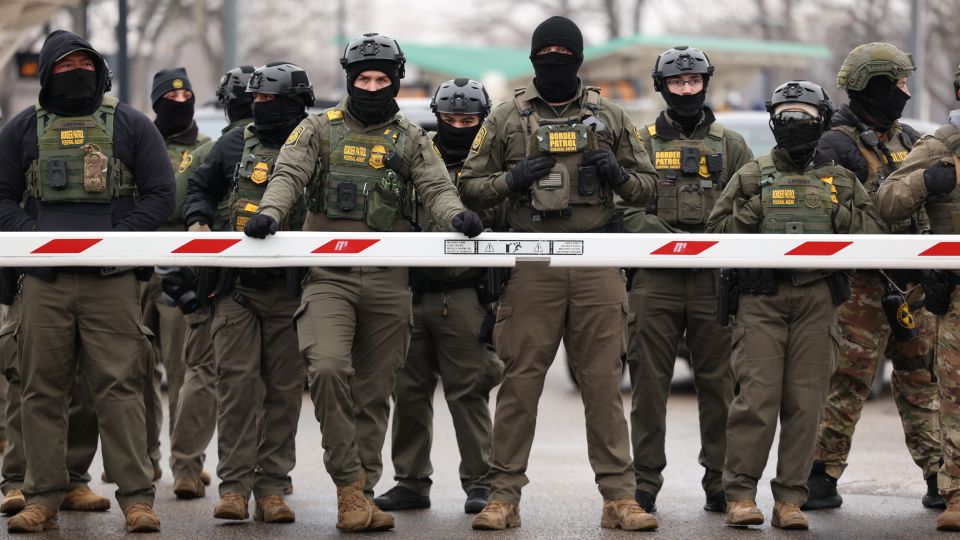
Immigration enforcement has been a key focus of President Donald Trump’s administration. The administration has carried out a series of immigration enforcement operations in multiple states, including Minnesota.
The operations in Minnesota sparked protests and led to increased scrutiny of the Department of Homeland Security. Two U.S. citizens, Renee Good and Alex Pretti, were fatally shot by federal agents in the state last month as the department carried out enforcement operations.
What To Know
Rigoberto Soto Jimenez, a man who was detained by ICE, filed a writ of habeas corpus earlier this month. The court entered an order requiring attorneys for the federal government to respond by February 5.
“That deadline came and went without a response from the Government,” Provinzino said in Friday’s order.
The court granted Soto Jimenez’s petition on February 9 and ordered the government to release “in Minnesota” by February 13. The court also ordered the the government to “return all property to him,” and file a status update no later than 3 p.m. on February 17 “certifying compliance with the order.”
“None of that happened,” Provinzino said. “Instead, Rigoberto S. J.’s counsel (not the Government) informed the Court on February 17 (after the Government’s deadline had passed) that Rigoberto S. J. had been released on February 12 in Texas (not Minnesota), and that the Government had kept his identity documents (specifically, his Minnesota Driver’s License, Minnesota Instruction Permit, and Mexican Consular ID card).”
Soto Jimenez spent the night in a shelter after being released in a state unknown to him without any identification, according to the court order. His attorneys arranged for his return to Minnesota using donated flight miles, the judge wrote.
“At the hearing, it quickly became apparent that the Government had no idea what had happened in this case,” Provinzino said.
The judge said prosecutors “referenced documents that they believed were filed in this case but never actually were” and “no one could definitively tell the Court where Rigoberto S. J.’s property was located.”
Provinzino said Special Assistant U.S. Attorney Matthew Isihara, the government attorney assigned to the case, “was most at fault for the Government’s continued noncompliance with the Court’s February 9 order.”
“SAUSA Isihara had notice of this case and at least three chances to remedy the issue before the show-cause hearing. And the Government offered little defense to avoid contempt,” the judge wrote. “Rather, the Government asked the Court to exercise its ‘discretion’ and ‘good graces’ based on the understaffing and oversized caseloads in the U.S. Attorney’s Office. But since the beginning of Operation Metro Surge, the Government has offered that excuse to this Court again, and again, and again (and to other judges in this district again, and again, and again, and again, and again, and again) to excuse its oversights and disobedience of court orders in immigration habeas cases.”
The judge said Isihara has been found in civil contempt of court. On Wednesday, the court imposed a $500 daily fine for each day after February 19 that Soto Jimenez was without his identification documents.
What People Are Saying
Judge Laura M. Provinzino of the U.S. Minnesota District Court, in an order: “This Court has been exceedingly patient with the U.S. Attorney’s Office and has granted its attorneys (including SAUSA Isihara) grace multiple times before when disobedience came to light. But at this point, the refrain of ‘understaffing’ and ‘too many cases’ has worn out its welcome, particularly when it comes at the expense of individual rights. This Court would never allow a private attorney or litigant to rely on an ‘I’m too busy’ excuse to justify disobedience of a court order. The Government is no different.”
What Happens Next
Provinzino said the court “empathizes with the challenging situation” federal prosecutors are in, but the goal going forward “should be ‘100% compliance with judicial orders.’”
The judge said if a prosecutor is aware that a judicial order was or is about to be violated, they should explain what is happening to the court, the reason for the violation and what steps are being taken to resolve it. Provinzino said the court “will look favorably on such submissions and will generally refrain from imposing sanctions” when it appears action is being taken to ensure compliance.
“What the Court will not tolerate is what happened here: disobedience and radio silence from the Government,” the judge wrote.
Do you have a story that Newsweek should be covering? Do you have any questions about this story? Contact LiveNews@newsweek.com.
Related Articles