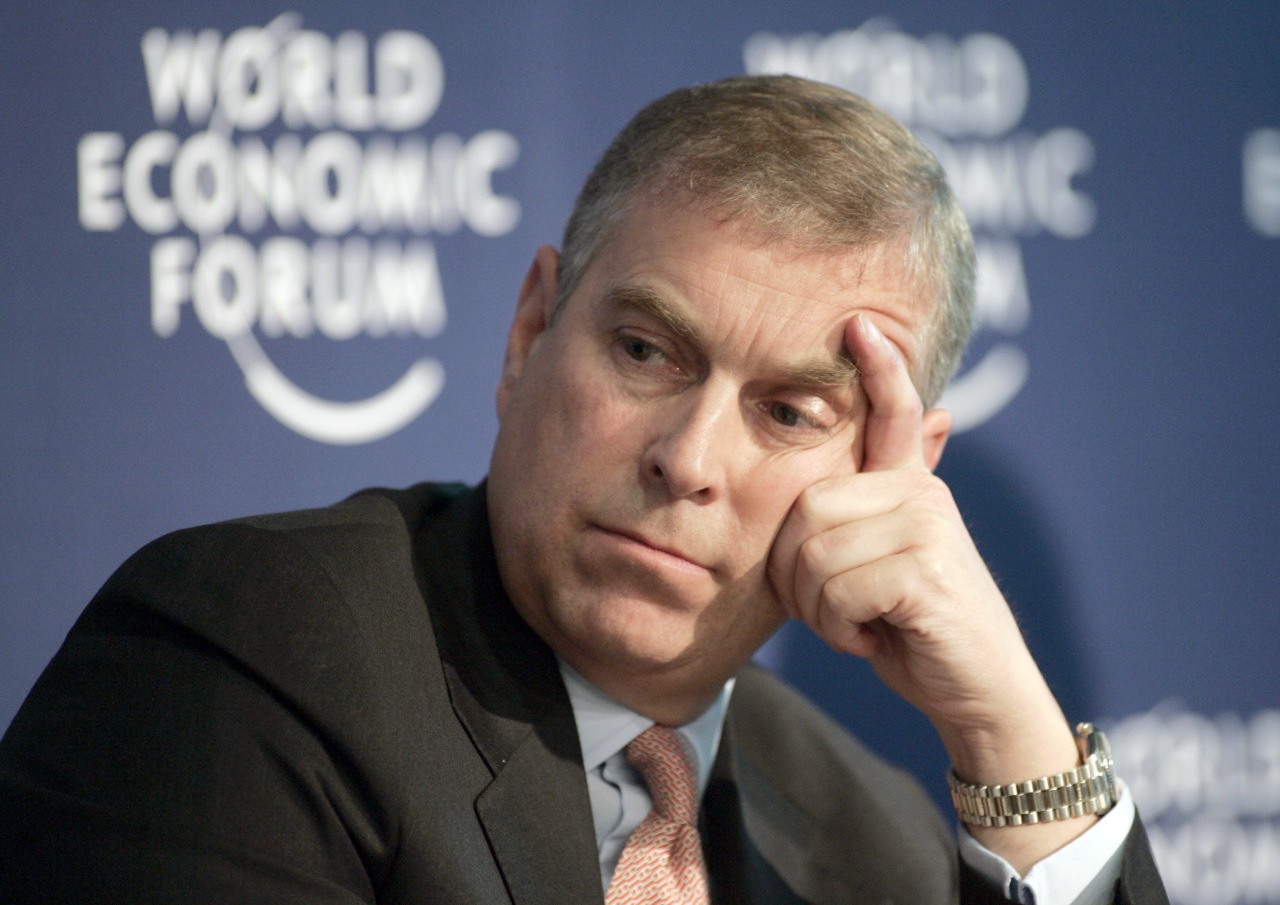
LONDON—In 2001, Prince Andrew retired from active duty in the Royal Navy, with a reputation as a war hero and something of a playboy. To keep the man now eighth in line to the British throne gainfully employed, the U.K. government gave him a new job: special representative for international trade and investment.
In the ensuing decade, Andrew toured the world, racking up expenses and earning the nickname “Air Miles Andy” as he rubbed shoulders with foreign royals, allies and despots in the name of banging the drum for Britain. Along the way, files released by U.S. authorities indicate he shared confidential government reports with convicted sex offender Jeffrey Epstein.
It was that, not allegations of sexual misconduct linked to his friendship with Epstein, that appear to be behind Andrew’s arrest this week on suspicion of misconduct in public office. Andrew, stripped of his royal titles late last year, was released, while police said they would continue the investigation. The British government, in conjunction with Buckingham Palace, is now considering introducing legislation to remove Andrew from the line of succession after the police investigation, a government minister said Friday.
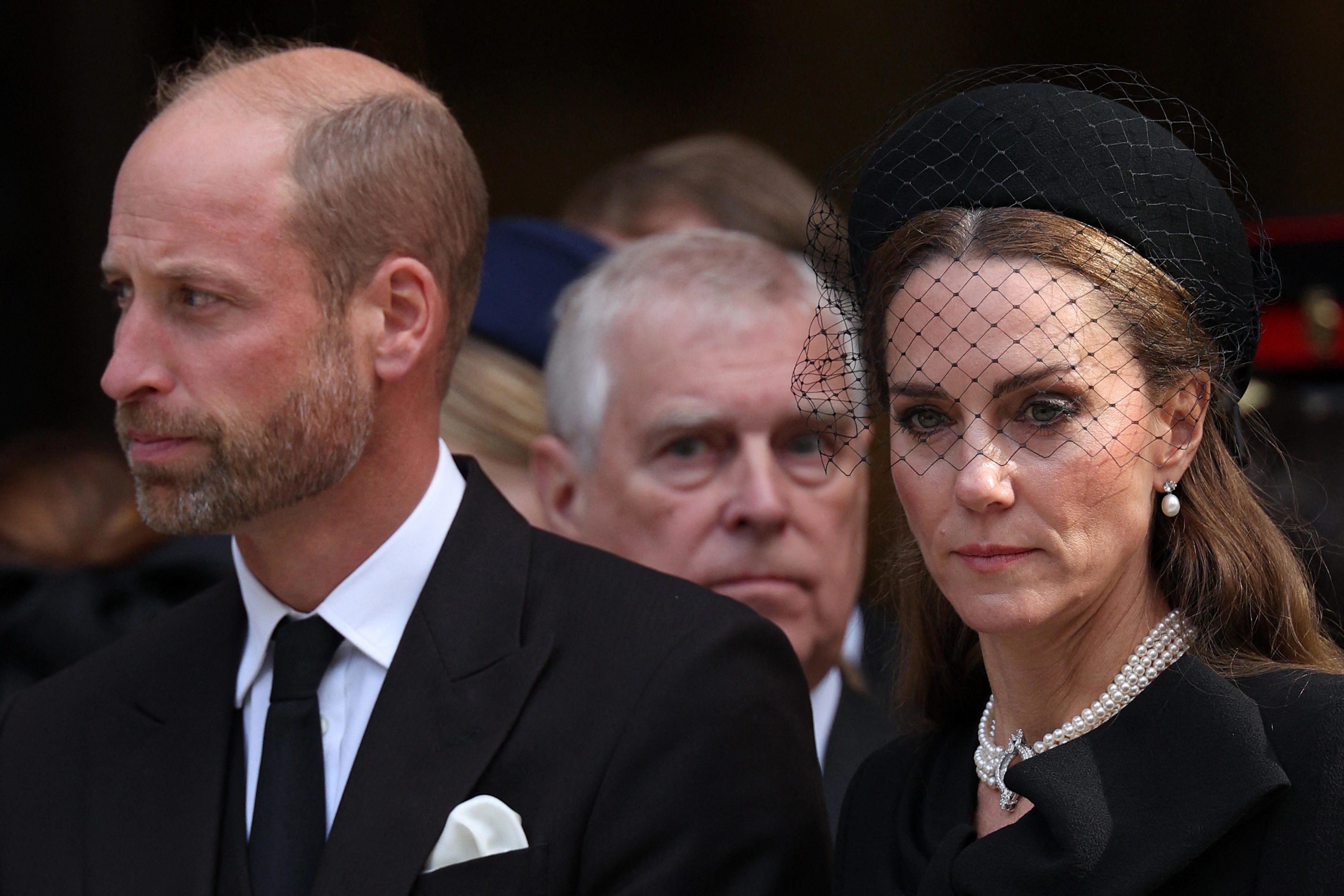
A picture of a shell-shocked-looking Andrew after he left the police station was splashed on the front page of virtually every major British newspaper Friday. He is the first high-ranking royal to be arrested since the mid-1600s. His arrest completes the social downfall of a man once toasted as the late Queen Elizabeth II’s favorite son and a dashing wartime helicopter pilot.
Andrew hasn’t commented on the allegations, and the police haven’t detailed exactly what aspects of his time in office they are probing. But police previously said they were looking into reports that Andrew shared confidential government information while he was trade envoy.
For years, Andrew has been dogged by his links to Epstein. In 2022 the ex-prince settled a lawsuit with Virigina Giuffre, who said she was trafficked by Epstein and abused by Andrew when she was 17 years old. That allegation, which Andrew has repeatedly denied and didn’t admit to as part of his settlement, cost the prince his trade-envoy job back in 2011.
The recent disclosures in the Epstein files from the Justice Department included new information about other instances in which Epstein arranged to have women visit Andrew. The police say they are looking into allegations one woman was trafficked to the U.K. by Epstein to have a sexual encounter with the prince.
But, for now, the former prince’s first brush with justice has come from a seemingly more mundane matter: the apparent forwarding of emails to Epstein in his role as Britain’s trade pitchman.
The files shine a light on the tail end of Andrew’s time as trade envoy, painting a picture of a prince who seems to have regularly blurred the lines between his diplomatic role and personal interest.
In late November 2010, following a trip to Southeast Asia as U.K. trade envoy, according to the files released by the U.S. government, Andrew forwarded to Epstein confidential reports on visits he conducted to Vietnam, Singapore, Hong Kong and Shenzhen, China, sent to him by a government aide. Epstein had previously helped advise on whom the prince should meet during his trip to China, according to emails.
The next month, those emails show, Andrew sent Epstein a confidential brief from a U.K.-led multilateral group in Afghanistan, the Provincial Reconstruction Team in Helmand Province, about international investment opportunities in Afghanistan. Andrew wrote to Epstein that he planned to offer the document to others in his network.
Separately, according to the documents, Andrew wrote to other contacts with information about U.K. government policies, and his own insights on the leadership and operations of British companies that he had gleaned in his role.
In July 2010, while acting as trade envoy, Andrew engaged in an email correspondence with Terence Allen, an investment banker based in the United Arab Emirates. During this exchange, Andrew shared details regarding the restructuring of the Royal Bank of Scotland, which was majority U.K.-taxpayer-owned at the time following its 2008 bailout. He informed Allen that he had met with the chief executive of the bank and had been told that it wouldn’t be selling a private banking operation it owned. Allen didn’t respond to a message requesting comment.
The exchange was also forwarded on to Epstein. “As requested,” Andrew wrote.
That October, Andrew presented another opportunity for Epstein, according to the trove of emails. He said a banker-friend who had taken over part of an Icelandic bank in Luxembourg to serve the ultrarich was looking for clients, and said Epstein might want to introduce some people he knew from China. “He agrees that the concentration should be on who pays whom and when!” Andrew wrote to Epstein.
Around the same time, a contact at a military fuel supplier in central Asia asked Andrew to make introductions to British banks for a credit line. Andrew forwarded the request to Epstein, who sent it to Jes Staley at JPMorgan. Andrew also, according to the emails, took steps to help Epstein connect with high-level officials in Libya while Andrew was on a trade visit there in November 2010. Staley didn’t immediately respond to a request for comment sent to his lawyer.
Lawyers say there is a high bar for securing charges or a conviction for misconduct while in office, a charge reserved for the most serious cases of public officials having willfully neglected the responsibilities or willfully abused their position, said Andrew Banks at Stone King law firm in London.
The spare
Andrew’s predicament lays bare a fundamental weakness, and contradiction, in the foundations of the House of Windsor: While the monarch and his direct descendant have a clear path in life and are scions of great wealth, their extraneous siblings are often at a loss for what to do or how to fund their aristocratic lifestyles.
“Where Charles was sensitive and thoughtful, Andrew was macho, confident and extroverted,” wrote Andrew Lownie, who chronicled the prince’s life in a recent book called “Entitled.”
In the early 1980s, Andrew served as a Navy helicopter pilot during the Falklands War and returned to cheering crowds in the U.K. The prince was named as trade envoy taking over from his relative the Duke of Kent. However, the then-Prince Charles had reservations about his brother taking on the position, according to palace officials. Andrew, a bachelor after his marriage to Sarah Ferguson ended in 1996, had a reputation for enjoying the company of women and using military helicopters to ferry him to golf events.
The then-government of Tony Blair, however, pushed ahead. “It’s about being part of, for want of a better expression, the golf bag,” Andrew once explained of his role in Britain’s diplomatic armory. “Which club do you want to get out to play this particular shot?”
Tony Blair’s offices didn’t immediately respond to a request for comment.
Andrew became known for cultivating friendships among foreign leaders, including in countries widely seen as corrupt. In 2007, he sold a mansion, which was given to him as a wedding present by Queen Elizabeth II, to the son-in-law of the Kazakh president for 3 million pounds, equivalent to $4 million, above the asking price, after it had sat unsold for years.
The deal raised questions in the British press about whether Andrew offered anything in return for the purchase. The palace at the time denied wrongdoing.
In 2009, a book by a former top aide to the Kazakh president, his son-in-law Rakhat Aliyev, claimed the house purchase was an informal way to ensure the prince would act as an ally in giving advice about business in the U.K. or making introductions. Aliyev died by suicide in 2015.
Andrew’s hobnobbing with relatives of former Libyan leader Moammar Gadhafi and Tunisia’s ex-president Zine al-Abidine Ben Ali, who was ousted during a popular uprising, raised questions from concerned lawmakers in Britain’s parliament. Diplomatic cables leaked by WikiLeaks show an American ambassador criticized the prince’s remarks to businessmen during a lunch in Kyrgyzstan, during which Andrew slammed a British Serious Fraud Office investigation into an arms deal with Saudi Arabia.
Some British ambassadors, especially in countries with monarchies such as in the Middle East, welcomed the access the prince gave them. “In terms of the return on investment to the U.K., I would suggest that £500,000 is cheap at the price,” Andrew told the Guardian newspaper in an interview in 2006 when quizzed about his expenses.
Chris Bryant, who saw Andrew’s travels up close as government minister for Europe, covering Russia, questioned the prince’s “inappropriate” diplomatic relationships and wrote in 2011 that the royal tours were “legendary—but not for the right reasons.”
Bryant said one trip the prince made to Bahrain coincided with the Formula One Grand Prix there. “Clearly Foreign Office staff were embarrassed by him—a couple of senior staff told me so—but it was well known Downing Street would not entertain anything that might possibly be interpreted as an attack on a member of the Royal Family,” he wrote in a newspaper column.
The prince said the trade role helped explain why he had grown so close to Epstein. “I was transitioning out of the navy at the time…I was going to become the Special Representative for International Trade and Investment. So I wanted to know more about what was going on in the international business world,” he told the BBC in 2019.
In “Entitled,” Lownie alleges that the then-prince often set his own travel schedule as trade envoy. He regularly turned up at the U.K.’s New York consulate, would commandeer the consulate’s car and visit friends, including Epstein, the book says.
Even as the scandals mounted, David Stern, a German businessman who worked closely with Epstein and acted as a liaison with Andrew, said that the prince’s reputation in the job was sound. “PA [Prince Andrew] good trade envoy or not? Business leaders state publicly yes,” Stern wrote to Epstein in July 2010. Stern didn’t return calls seeking comment.
That crumbled when the allegations of Andrew’s alleged sexual abuse were published in the tabloids. In 2011 the government announced Andrew would step back from the trade job.
Buckingham Palace at the time said the duke would “continue to support business in the U.K.,” adding that he “will undertake trade engagements if requested.”
Write to Max Colchester at Max.Colchester@wsj.com, Margot Patrick at margot.patrick@wsj.com and David Luhnow at david.luhnow@wsj.com