
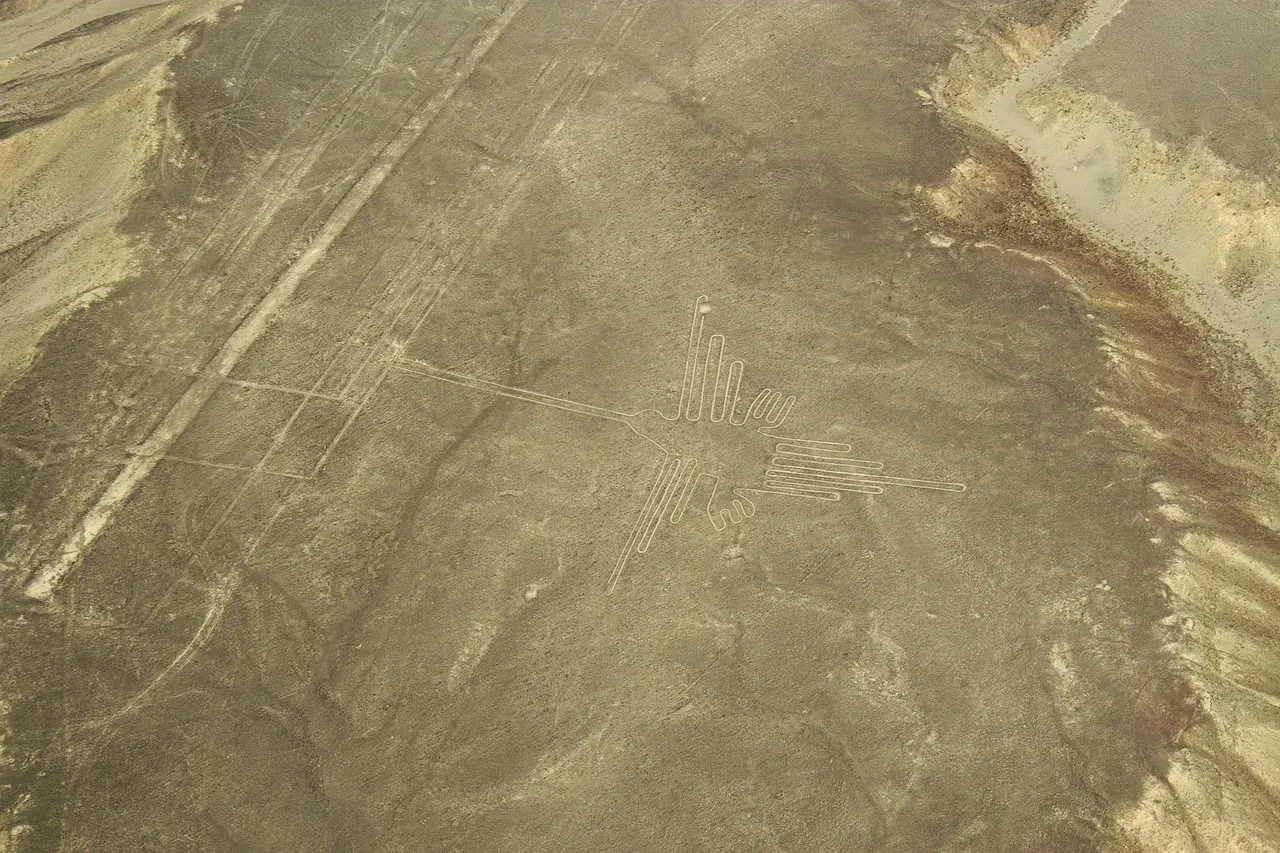
1. The Nazca Lines, Peru - Ancient Desert Art Nobody Fully Understands
Etched into the dry plains of southern Peru are one of the most haunting artistic achievements in human history. The Nazca Lines are a group of geoglyphs made in the soil of the Nazca Desert in southern Peru, created between 500 BC and 500 AD by people making depressions or shallow incisions in the desert floor, removing pebbles and leaving different-colored dirt exposed. They are enormous.
The combined length of all the lines is more than 1,300 km, and the group covers an area of about 50 square kilometers. Here's the thing that genuinely baffles me about them. With the arid ground as their canvas, ancient Peruvians worked on a scale so vast that many of their designs can only be fully admired and appreciated from the air - ironically, a viewpoint the artists never had.
In 2024, a stunning breakthrough arrived from an unexpected direction. A team of archaeologists from Yamagata University's Nazca Institute, in collaboration with IBM Research, used artificial intelligence to discover 303 previously unknown geoglyphs depicting parrots, cats, monkeys, killer whales, and even severed heads near the Nazca Lines in Peru. In just six months, the AI-assisted study identified 303 new geoglyphs, adding to the 430 that had been discovered over nearly a century.
Still, even with all this new data, the reason behind the lines stays murky. The discovery of these new geoglyphs has reignited discussions about the purpose of the Nazca Lines. While some researchers believe the lines had spiritual or astronomical significance, others suggest they may have been linked to agricultural or irrigation practices.
However, no single theory has been universally accepted.
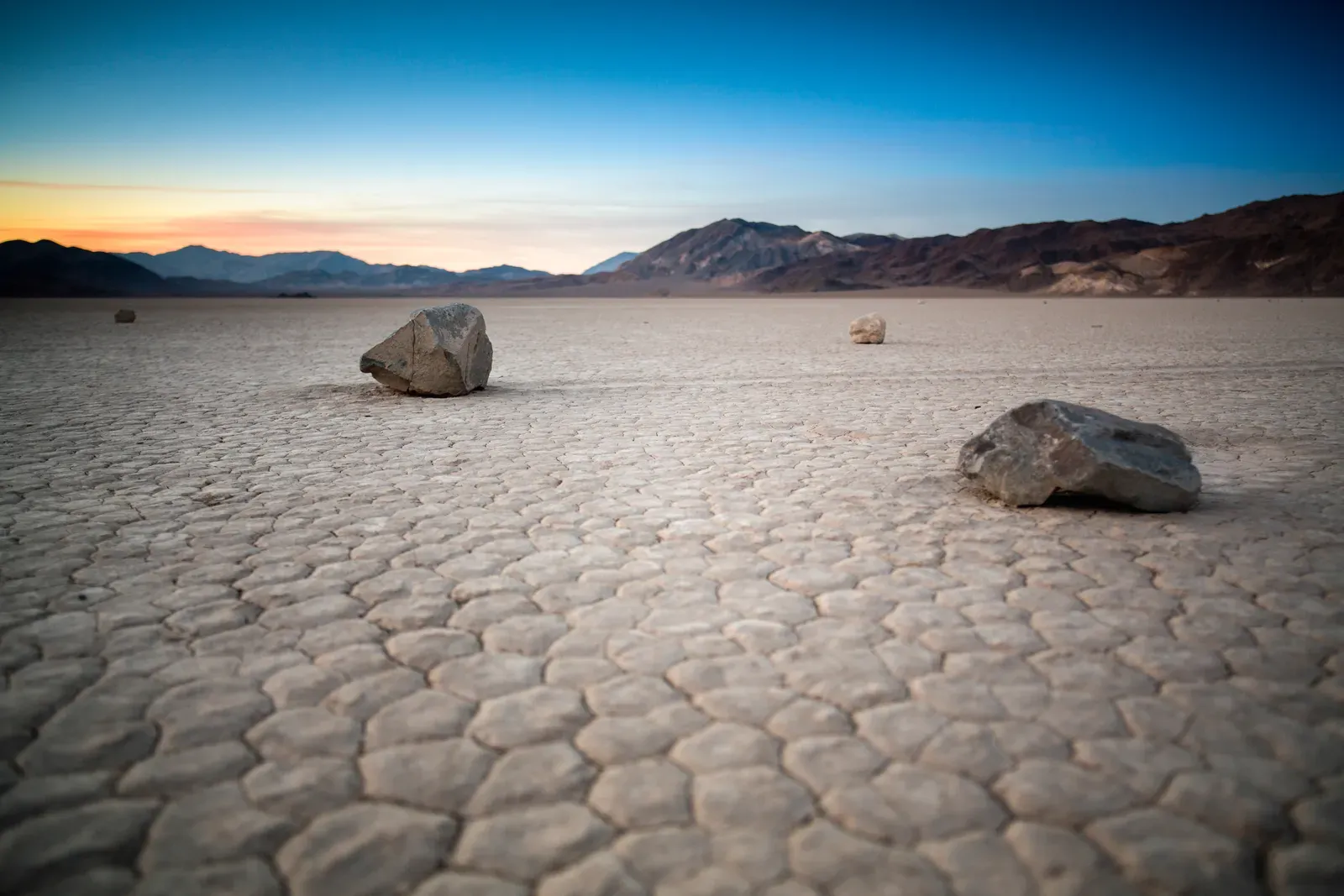
2. The Sailing Stones of Death Valley, USA - Rocks That Move on Their Own
Imagine arriving at a barren desert lake bed to find enormous boulders sitting at the end of long, winding trails in the dirt. Nobody watching. No animals in sight.
No machinery. Just rocks that apparently packed up and went somewhere. One strange geological phenomenon is the sailing stones most famously found in Death Valley's Racetrack Playa.
These rocks, weighing up to hundreds of pounds, appear to glide, sometimes non-linearly, across the desert floor without animal intervention. It wasn't until 2014 that scientists were able to capture actual footage of movement via time-lapse photography. With direct evidence only coming within the last ten years, explanations for this strange movement are still in the works.
The most popular explanation involves ice sheets. Scientists generally believe that the natural movement of these sailing stones is due to a complex interplay of the unique conditions in the area. In this account, water accumulates under each rock and eventually freezes during the area's colder nights.
When the sun comes back up and the temperature rises, the ice begins to melt and break up into floating panels. These ice panels are strong enough to push the stones across the flat and dry ground. Sounds reasonable, right?
Except it isn't quite settled. This explanation, though promising, has not been universally accepted, and scientists are still studying the mysterious Death Valley Sailing Stones to this day. Racetrack Playa is one of those places where you stand still, look at the rock trails, and feel the ground shift a little under your own understanding of physics.
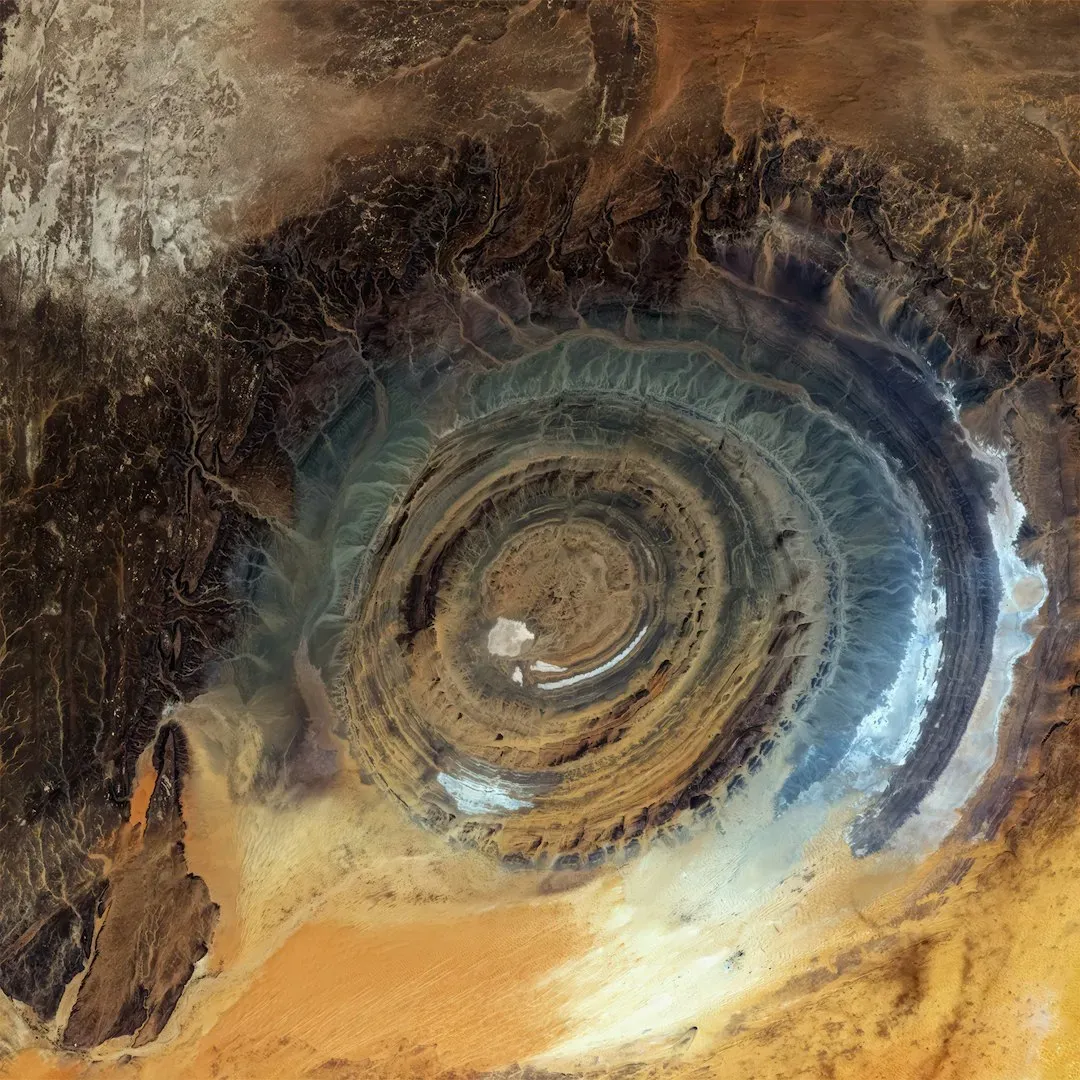
3. The Eye of the Sahara (Richat Structure), Mauritania - A Scar Visible From Space
Seen from above, it looks like a giant, perfectly symmetrical target painted onto the desert. The Richat Structure is a mysterious place, a concentric ring in the Earth's crust with such an otherworldly and almost-artificially symmetrical appearance it's known as the Eye of the Sahara. Rippling through the desert for 25 miles, Mauritania's Richat Structure is so huge it was only identified when astronauts spotted it from space.
Honestly, it's one of those formations where you understand why conspiracy theorists get excited. The Eye of the Sahara, also known as the Richat Structure, is a 28-mile-wide site of huge concentric circles found in the western African nation of Mauritania. Geologists initially thought the site was created by an asteroid impact, but there isn't enough melted rock among the rings to support this theory.
Similarly, there's no evidence to suggest a volcanic eruption. So what caused it? More recently, geologists have proposed that the Eye of the Sahara could be an eroded, collapsed geological dome, formed some 100 million years ago when the supercontinent Pangea broke up.
That theory is currently the leading contender, but it hasn't shut the door on debate. New Age enthusiasts hint that the Eye of the Sahara could represent the remains of the mythical sunken island of Atlantis, based on Plato's allegory. Scientists obviously push back hard on that one.
Still, the sheer geometric precision of the formation, across such a massive scale and in the middle of one of the world's most desolate deserts, gives even the most skeptical geologists pause.
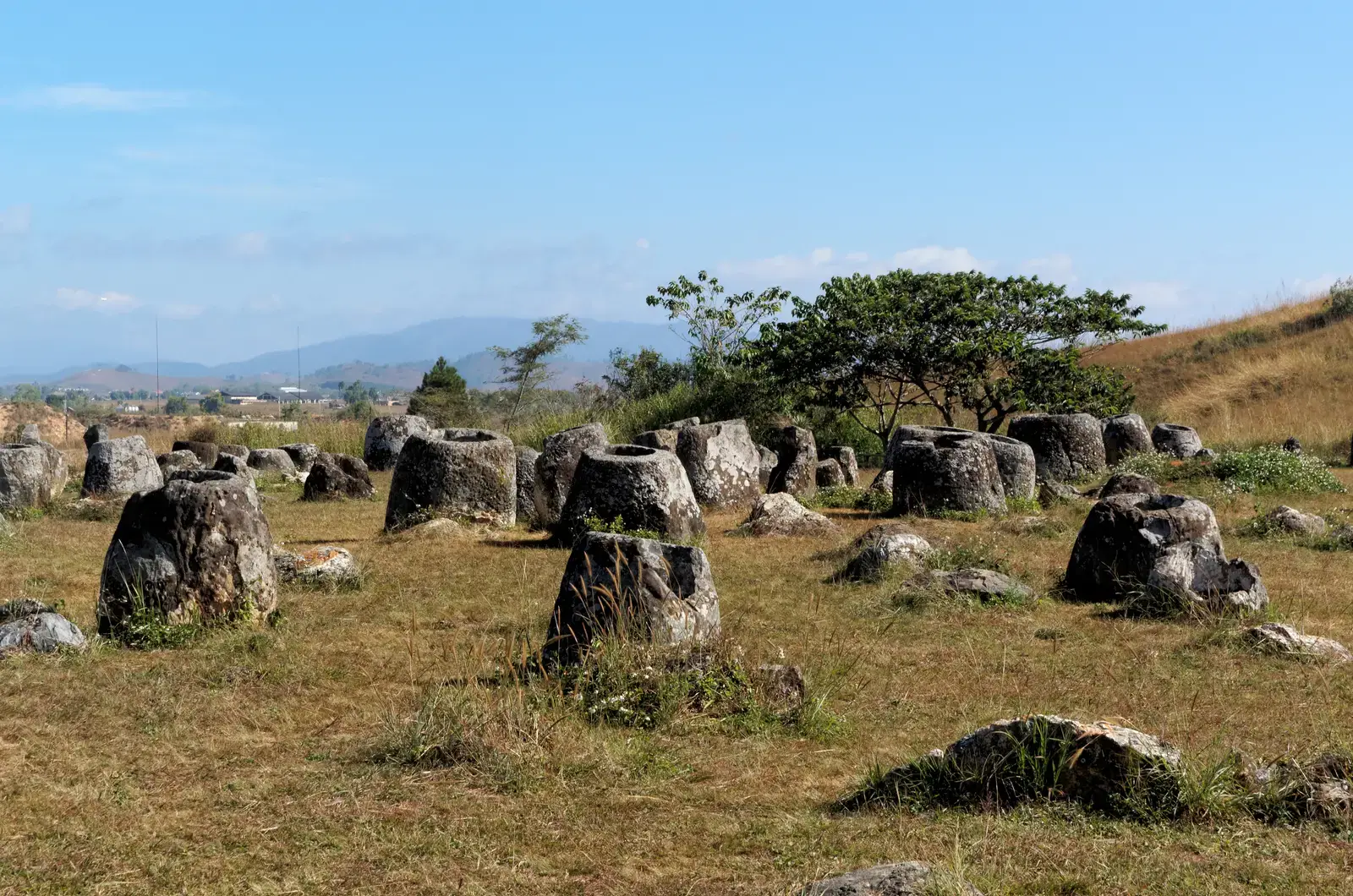
4. The Plain of Jars, Laos - Thousands of Stone Vessels, Zero Explanations
Scattered across the highlands of central Laos, thousands of enormous stone jars sit on plateaus and hillsides as if someone just left them there and never came back. The Plain of Jars on the Xieng Khouang plain of Laos is one of the most enigmatic archaeological points of interest on Earth. The unusual scattering of thousands of megalithic jars across nearly one hundred sites deep in the mountains of northern Laos has fascinated archaeologists and scientists ever since their discovery in the 1930s.
The Plain of Jars is made up of at least 3,000 giant stone jars up to three meters tall. The jars themselves demonstrate hierarchical distinctions: jars range from 1 to 3 meters in height, with some weighing up to 14 tons. Research using Optically Stimulated Luminescence dating has given us some answers.
New research conducted at the UNESCO World Heritage listed Plain of Jars in Laos has established the stone jars were likely placed in their final resting position from as early as 1240 to 660 BCE. Yet the biggest question of all remains open. How the jars were moved from the quarry to the site remains a mystery, according to Associate Professor O'Reilly of the Australian National University.
The function of the jars is equally contested. The function of the jars is still debated, with some archaeologists suggesting that they were prehistoric mortuary vessels, evident by the discovery of human remains, burial goods, and ceramics around the jars. Some specialists claim that the effort required to have made so many jars suggests they were designed to capture rainwater during monsoon season for use by caravans passing through the region.
To this day, there are still no concrete explanations for the origin of the jars.
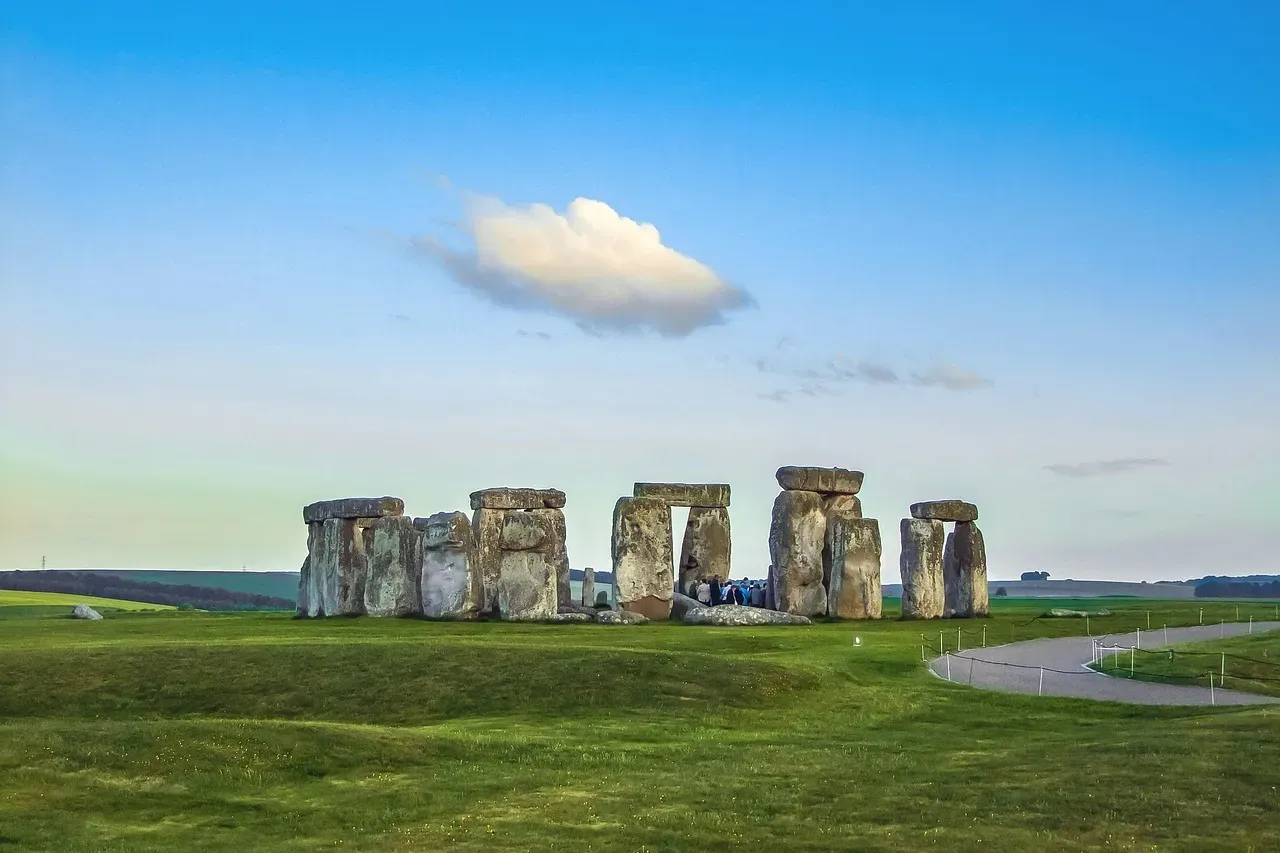
5. Stonehenge, England - The Monument That Keeps Generating New Questions
You'd think that after thousands of years, this one would be solved. It isn't. Stonehenge in Wiltshire, England, is one of the most iconic and mysterious prehistoric monuments in the world.
This ancient stone circle, dating back over 4,000 years, has baffled historians and archaeologists with questions about its purpose and construction methods. Often linked to celestial events, rituals, and ancient astronomy, Stonehenge attracts millions of visitors each year seeking to uncover its secrets. In 2024, scientists revealed a potentially huge piece of the construction puzzle for the broader Egyptian pyramid mystery that also shed light on how ancient peoples moved colossal stone structures.
The mystery of how exactly the Egyptians moved the massive stone blocks to build their pyramids might finally have been solved. In May 2024, scientists revealed they'd discovered a long-buried branch of the Nile, and in doing so, potentially unearthed a truth about the construction of these world-famous landmarks. The 40-mile-long branch, buried beneath the sand for millennia, was discovered using radar satellite imagery.
Similar water-based transport theories have been applied to Stonehenge as well. Still, the full picture remains elusive. The coordination of the building's architecture with solar phenomena suggests a deep astronomical significance for the structure, though this too is unclear.
Regardless of explanations, Stonehenge remains a mysterious and awe-inspiring place, where modern science meets ancient myths in ways that still defy explanation. There is something deeply human and deeply humbling about standing in front of those stones, realizing that far smarter people than any of us have tried to crack this and walked away uncertain.
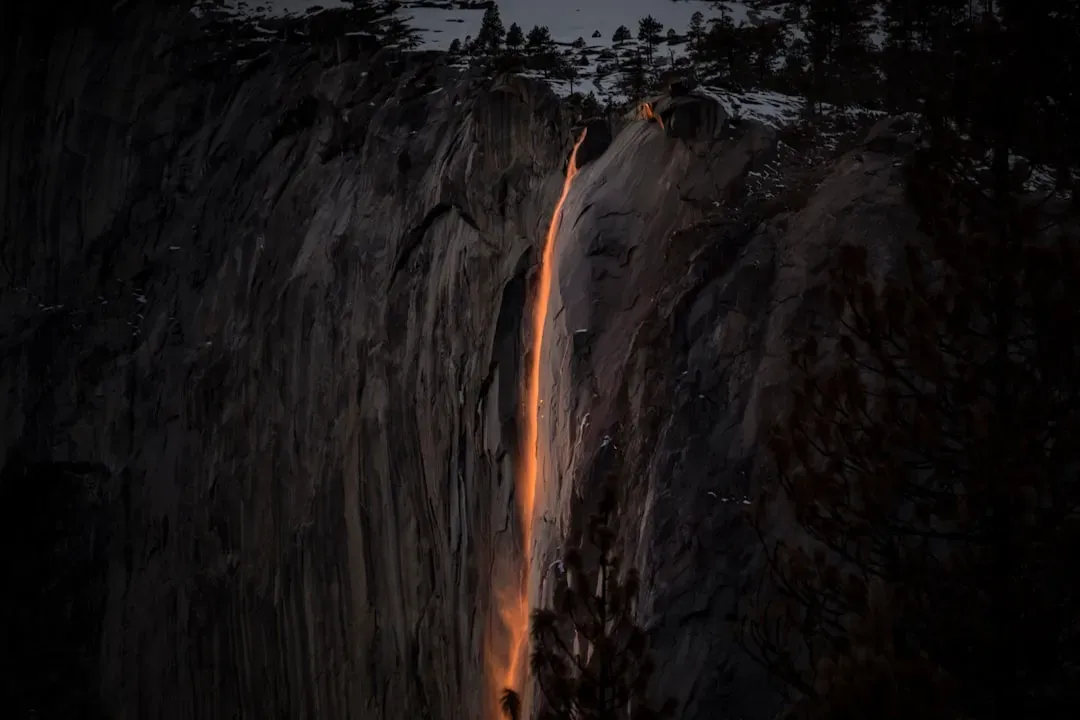
6. The Eternal Flame Falls, New York, USA - Fire Behind a Waterfall
This one sounds like a fairy tale. In a small preserve in western New York, a perfectly normal waterfall conceals a small, persistent flame burning in a grotto behind it. Water and fire, together, in defiance of everything you learned in school.
Everyone knows that fire and water don't mix, but one particularly mysterious place in western New York seems to prove otherwise. Eternal Flame Falls in the Shale Creek Preserve baffles geologists with its juxtaposition of fire and water. Visitors to the 35-foot waterfall can peer beyond the falls to a small, flickering flame hidden in the caves behind the water.
You might assume it's just a natural gas seep, heated by deep rock. That would make sense. Except: Scientists initially believed that, as was the case with other eternal flames, hot rocks releasing natural gas deposits from under the ground started the fire.
Researchers from Indiana University, however, found that the rock under the waterfall wasn't hot enough to form the necessary pockets of natural gas to keep the flame burning. So what's keeping the eternal flame flickering behind the falls? No one has a scientific explanation for it, but legend gives credit to local Native American tribes, claiming they lit the flame thousands of years ago.
I think that's one of the rare cases where the legend is actually more satisfying than anything science has offered. The flame keeps burning. Nobody truly knows why.
Go see it for yourself.
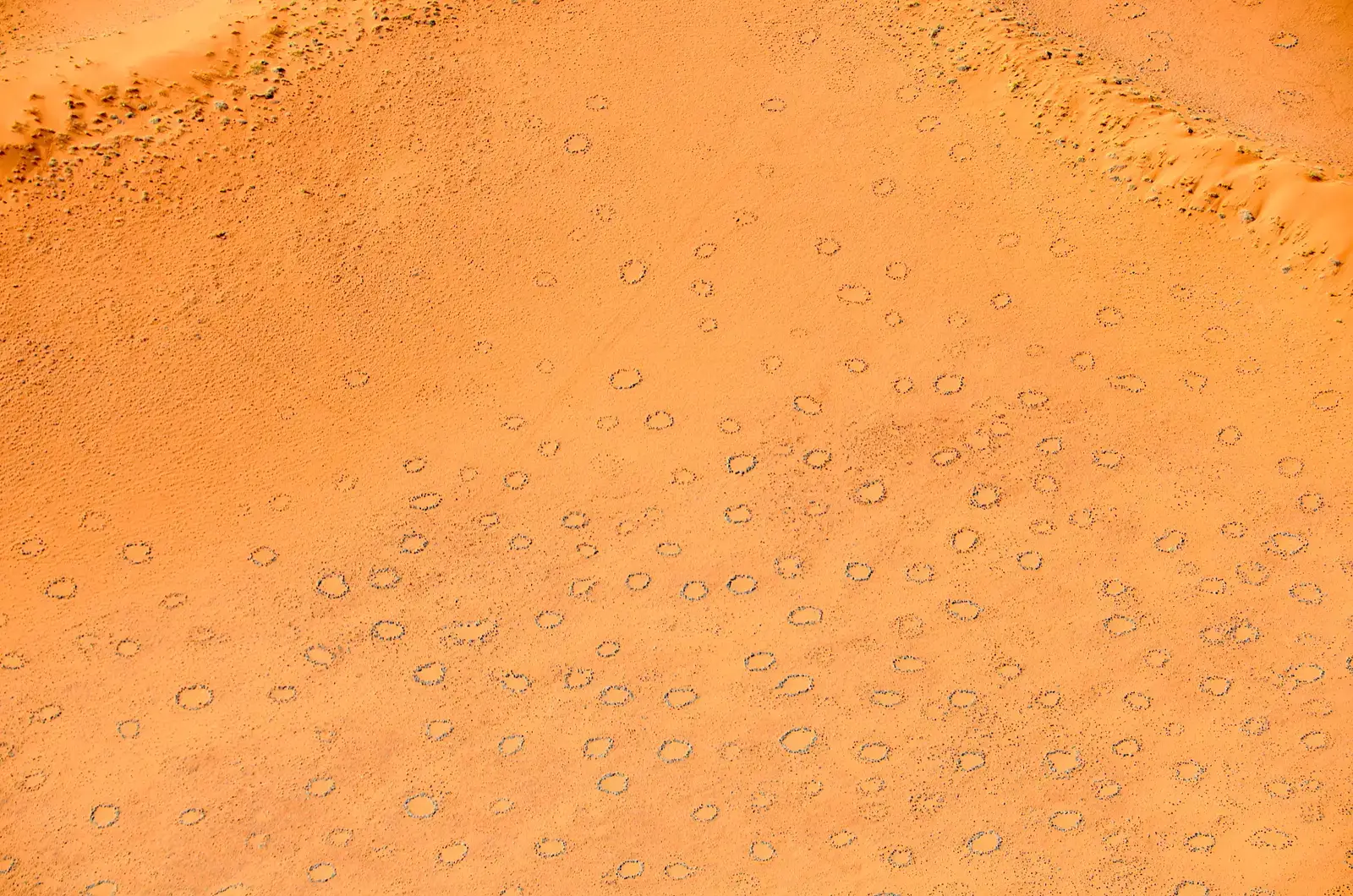
7. The Fairy Circles of Namibia - Ghostly Rings Across the Desert
Fly over the Namib Desert and you'll see something that stops your breath cold: thousands upon thousands of perfect, barren circles stamped across the landscape in every direction, as far as the eye can see. They look alien. They look designed.
The mysterious fairy circles of Namibia are circular patches, typically six to 40 feet in diameter, of barren soil bordered by grass. They extend for over 1,000 miles throughout the Namib Desert in Southern Africa, one of the driest regions on Earth. And here's where it gets truly interesting: Researchers have also spotted them in a part of the Pilbara in Western Australia.
While no theory fully explains the origins of fairy circles, a 2022 study linking them to ecohydrological feedback has proven convincing. Significantly, the study debunks previous theories claiming pest activity is responsible. Scientists argued that the grass around the circles pulls water away from the center creating a vacuum effect that deprives inner grasses, which cannot survive.
Yet that still doesn't close the case. While scientists dismiss the local legend, they can't seem to agree on a reasonable explanation either. Some say termites formed the fairy circles by clearing the vegetation around their underground habitat in order to create natural rainwater reservoirs.
Termites or hydrology. The debate rages on. And the circles themselves, indifferent to all of it, keep appearing across hundreds of miles of red sand.
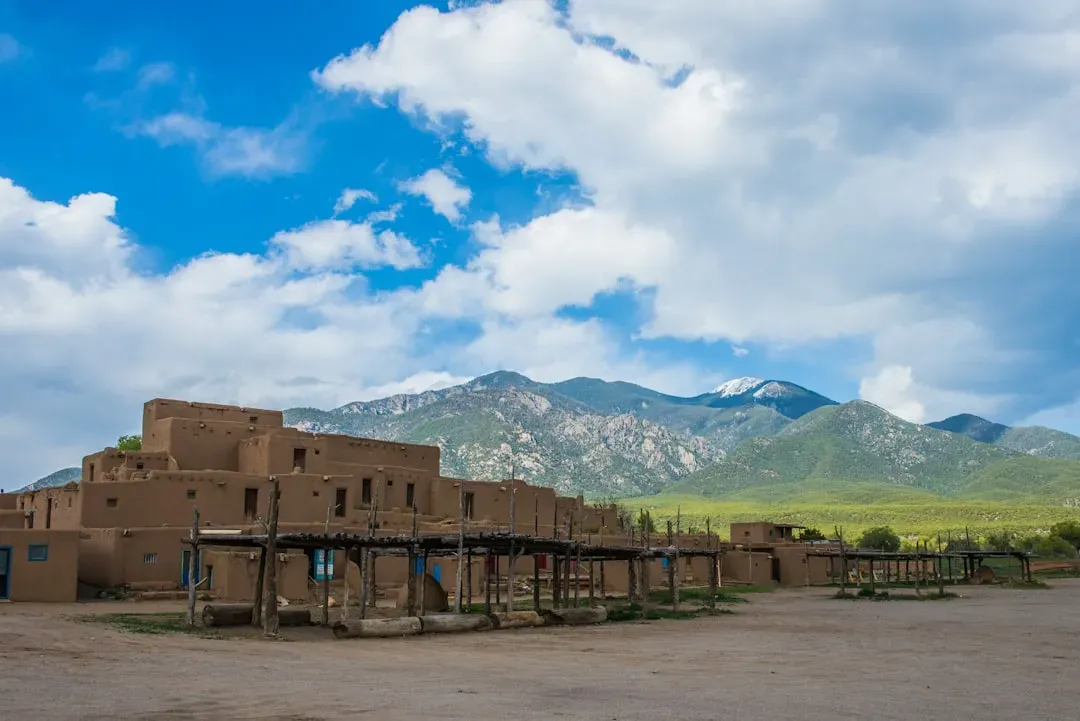
8. The Taos Hum, New Mexico, USA - A Sound Only Some People Can Hear
Imagine moving to a quiet desert town and slowly becoming aware of a low, persistent drone coming from everywhere and nowhere at once. Now imagine that your neighbors standing right next to you hear absolutely nothing. That is life in Taos, New Mexico, and it has been that way for decades.
One area where this mysterious humming is reportedly most prevalent is the town of Taos, New Mexico. Since at least the early 1990s, and possibly much earlier, residents of Taos have reported hearing a low, persistent humming noise that seemed to be coming from everywhere around them. Even more strangely, this Taos Hum seemed to be audible to only a limited number of the town's population.
In many cases, several residents would report hearing the hum, while people standing right next to them would report hearing nothing at all. Scientists have not given up on it, but they also haven't solved it. Scientists have offered many different explanations for the Taos Hum, ranging from underground gas lines to atmospheric noises to sounds made by certain types of animals.
It's hard to say for sure what's happening in Taos, but the pattern of selective hearing makes it especially baffling. If it were purely physical, everyone nearby should hear it. The fact that only a portion of the population does implies either remarkable differences in human auditory perception, or something stranger entirely.
The Taos Hum has become a kind of pilgrimage for the audibly curious. People travel from across the world hoping to hear it, and some do while others return home disappointed. It raises genuinely uncomfortable questions about the gap between objective physical phenomena and subjective human experience, a gap that science still doesn't have a clean theory to bridge.
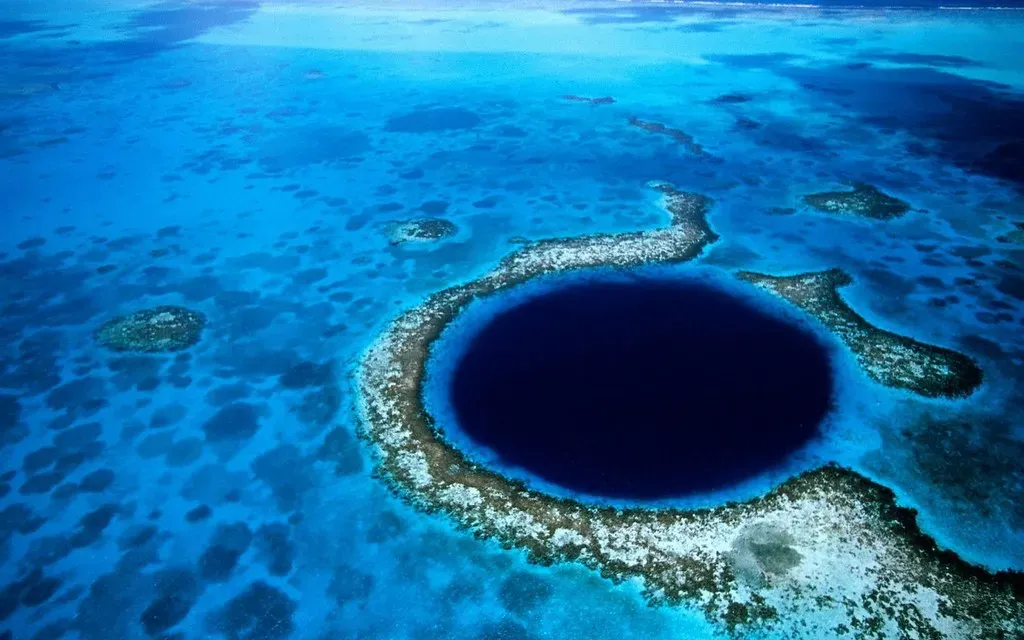
9. Taam Ja' Blue Hole, Mexico - The Deepest Underwater Abyss With No Known Bottom
Off the coast of Mexico, beneath the turquoise surface of Chetumal Bay, lurks a hole in the seafloor so deep that scientists still have not found where it ends. Not a metaphor. Not an exaggeration.
They literally cannot find the bottom. Located in Chetumal Bay, just off the coast of Mexico, Taam Ja' is now officially the world's deepest underwater blue hole. Measuring at least 1,380 feet below sea level, scientists still don't know exactly where the bottom of the sinkhole is, but they do now believe it to be part of a huge network of underwater caves and tunnels.
Let that sink in. More than 1,300 feet of measured depth, and the instruments still ran out before the floor did. The whole structure appears to be connected to a vast, unexplored labyrinth of underwater passages.
The implications for what might live down there, or what geological processes created it, are enormous. In the last few years, researchers have stumbled upon baffling signals from deep space, uncovered strange features hiding beneath our oceans, and found clues that hint at life's secrets on other worlds. Some of these mysteries may be on the brink of being solved, while others continue to defy even our most sophisticated theories.
Taam Ja' is a perfect symbol of that reality. We have mapped the surface of Mars with more precision than we have mapped the deep-sea floors and cavern systems of our own planet. Despite all of the many advances in science, archeology, and historical research over the past several decades, the world remains a mysterious place.
Even as we learn more and more about our planet and our history, many locations across the globe remain infamous for bizarre and unexplained phenomena that defy clear explanations. Taam Ja' is not a distant legend on some ancient map. It is a hole in the ocean, right now, that no human has ever fully explored.
That should rattle you at least a little.
A Final Thought
What ties all nine of these places together is not just mystery. It's the humbling realization that our confidence in human knowledge has limits, real and verifiable ones. Rocks move without being pushed.
Flames burn without adequate fuel. Ancient civilizations carved and transported megaton stones across mountain terrain without any tool we'd recognize today. Circles appear across hundreds of miles of desert and nobody agrees on why.
The planet is not finished surprising us. And honestly, I think that's a good thing. A world with no more mysteries would be a much duller place to live. Which of these nine would you most want to visit and experience firsthand?
Drop your answer in the comments.