Federal agents and local officers moved in near dawn, surrounding quiet commercial blocks and industrial yards across the East Bay as they unraveled a sophisticated fuel theft network that had quietly siphoned gasoline out of the region’s economy. You are seeing the fallout of a crime that did not just skim a few tanks, but turned stolen fuel into a statewide business model, complete with hidden storage, resale operations, and a trail of danger for anyone living near the makeshift depots.
For residents and drivers, the takedown is more than a dramatic law enforcement story. It is a window into how organized theft exploits everyday infrastructure, from corner gas stations to freeway corridors, and how agencies now coordinate to shut those schemes down before they trigger fires, explosions, or even broader supply disruptions.
How a quiet fuel racket grew into a statewide threat
The operation that investigators say was based in Oakland did not look like a traditional smash‑and‑grab. You were dealing with a crew that allegedly targeted multiple gas stations, often during overnight hours, then moved the stolen product into a shadow distribution chain that reached well beyond the East Bay. Officials describe a statewide fuel theft ring that treated gasoline like contraband, moving it in bulk and reselling it through unlicensed and illegal fuel dispensing operations that blended into ordinary commercial activity.
Investigators believe the group stole fuel from multiple gas stations, primarily during overnight hours, then resold it on the black market, according to Investigators. Earlier this year, a coordinated account described how the FBI, California Police, Scale Fuel Theft Operation Across East Bay, with agents and officers linking the thefts to a network of unpermitted pumps and storage tanks. For you as a consumer, that means the gas that seemed to come from a bargain supplier may have been pulled straight out of someone else’s legitimate inventory.
Raids from Oakland to Richmond show the scale of the crackdown
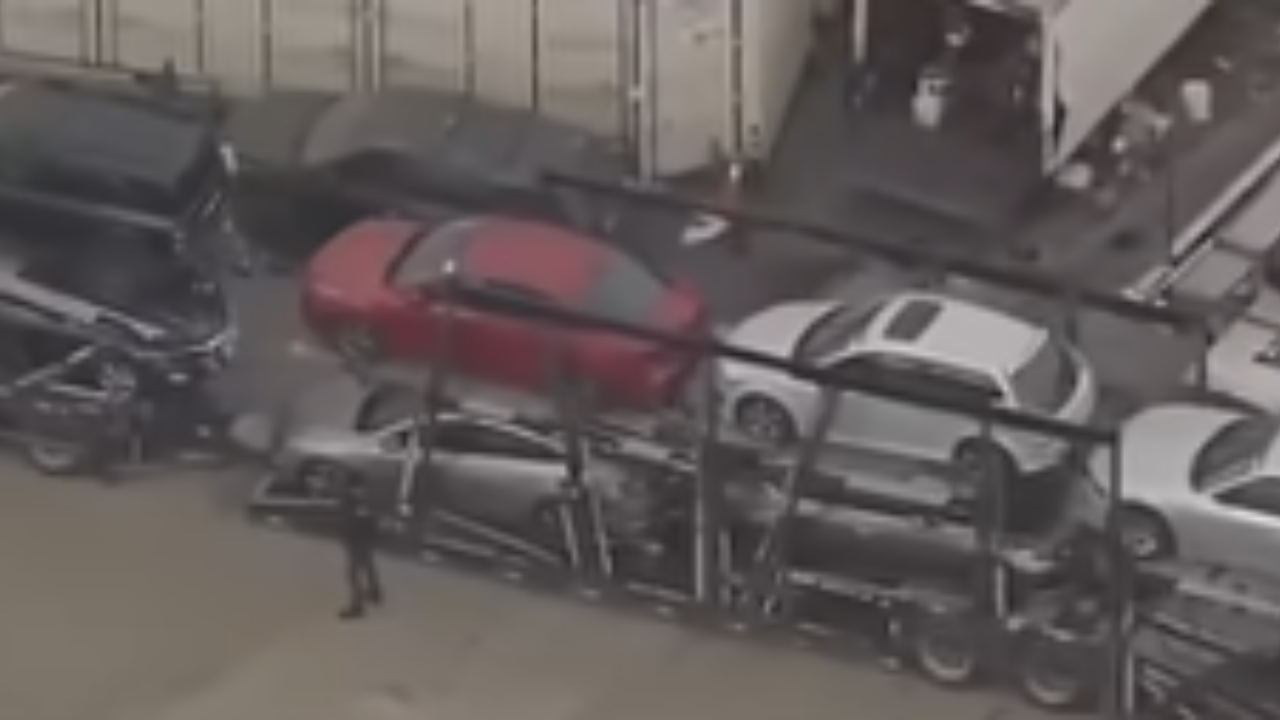
The takedown unfolded as a show of force across the East Bay, with heavily armed teams serving warrants in several cities at once. Video from one operation captured a line of tactical vehicles and officers moving in on suspected stash sites, part of a sweep that targeted locations in San Leandro, Richmond, and other East Bay communities. There was a clear intent to hit every major node of the network at once so suspects could not simply shift fuel or equipment to another yard down the freeway.
Several agencies were on the ground in numerous cities around the East Bay on Wednesday, with one location in San Leandro and one in Richmond singled out as key targets, according to a detailed account that noted how Several departments converged on the East Bay. A separate video report described how there was a show of force across the East, with nearly a dozen locations hit in a single coordinated push that underscored how deeply the ring had embedded itself in the region’s industrial corridors, as seen in Jan coverage of the raids.
Inside the coordinated playbook: FBI, local police, and a careful message
From your perspective, what stands out is not just that the ring was disrupted, but how many agencies had to move in sync to make it happen. The FBI joined local departments in a multi‑city fuel theft raid across the East Bay, with federal agents working alongside city officers who know the streets and industrial zones best. That kind of joint operation is now standard for complex property crimes that cross city and county lines, especially when suspects are believed to be moving stolen goods along major transportation routes.
Authorities emphasized that the law enforcement activity was not related to immigration enforcement and did not involve U.S. Immigration and Customs Enforceme, a point aimed at calming residents who saw armored vehicles and long guns in their neighborhoods. One account noted that the Organized fuel theft investigation in the East Bay was led by a regional task force, while another highlighted that the law enforcement activity was not related to immigration enforcement and involved the local police and San Leandro Police Department. In the East Bay, the FBI joined a multi‑city raid that officials described as an FBI backed Organized effort, and they stressed that this type of fuel theft can lead to fires or explosions if left unchecked.
During the operation, warrants were served at locations on the 4200 block of Alameda Avenue and the 1000 block of 45th Avenue in East Oakland, part of a sweep that also reached into the Central Coast, according to a detailed description that began, During the raids. For you, that level of specificity matters because it shows how investigators followed the fuel trail from neighborhood streets to regional distribution hubs, rather than treating each theft as an isolated incident.
What investigators say the thieves actually did with the fuel
Once the fuel was stolen, the ring allegedly turned it into cash through a mix of resale tactics that you might not notice at a glance. Officials say that after stealing the fuel from gas stations, the group stored it in large containers and then sold it at a discount to buyers who were willing to look the other way about where it came from. That could mean unmarked pumps in industrial yards, off‑the‑books deliveries to small businesses, or even direct sales to drivers who thought they were simply getting a deal.
Officials say after stealing the fuel from gas stations, the group moved it into hidden storage and then resold it, using Oakland as its base of operations, according to a detailed account of the Massive statewide ring. Another report noted that The FBI and local officers in California recovered a stolen car and four firearms while investigating how the group siphoned fuel from multiple gas stations, as described in a summary that began, The FBI and California. For you, that mix of stolen vehicles, weapons, and hazardous fuel storage underscores that this was not a victimless economic crime but a broader public safety risk.
Investigators also drew a line between this fuel ring and a wider pattern of organized property crime across California. In a related context, officials pointed to a case where Burglars stole over $200,000 in luxury handbags from a Newport Beach boutique, a reminder that the same networks that move stolen fuel can also traffic in high‑end goods, as noted in a report that highlighted $200,000 and referenced MORE, Burglars, and Newport Beach. For you as a resident or business owner, that connection signals that fuel theft is part of a larger ecosystem of organized crime that targets whatever commodity can be moved quickly and quietly for profit.
Why this bust matters for your neighborhood and your wallet
When you pull up to a pump, you probably are not thinking about organized crime, but this case shows why you should care about what happens behind the scenes. Large‑scale fuel theft can distort prices, strain small station owners who suddenly find thousands of dollars in product missing, and push some to raise prices or cut staff to survive. It also puts you at risk if illegal fuel depots pop up in residential or mixed‑use areas, where a single spark could turn an unpermitted tank into a neighborhood disaster.
Earlier this year, a video segment opened with the line that tonight the FBI and multiple agencies descended on the East Bay, their target an organized theft ring stealing fuel, underscoring how seriously authorities now treat this kind of crime, as seen in Jan coverage of the East Bay raids. Another broadcast framed the other top story as a massive law enforcement operation that resulted in the bust of a statewide fuel theft ring, highlighting how the case had become a regional flashpoint, as captured in Jan reporting. For you, the message is clear: when agencies invest this level of resources, they are signaling that fuel theft is not a fringe issue but a core part of how they protect local economies and public safety.
More from Fast Lane Only
The post FBI and California cops crush massive East Bay fuel theft scheme appeared first on FAST LANE ONLY.