Concerns are mounting at the 2026 Winter Olympics in Milan-Cortina after multiple athletes reported their newly won medals cracking, chipping or breaking during post-competition celebrations, prompting organizers to launch an investigation into the cause of the damage.
Several incidents have circulated widely on social media and in news coverage, raising questions about whether the medals’ design, materials or attachment mechanism could be contributing to the problem.
Athletes from different sports and countries have described similar experiences, often occurring shortly after they stepped off the podium.
American downhill skiing champion Breezy Johnson was among the first to draw attention to the issue after her gold medal fell to the ground during celebrations.
“I was jumping up and down in excitement, then it just fell off,” she told reporters, as per Inside the Games.
She later showed a visibly cracked and chipped medal while the ribbon remained around her neck. She eventually received a replacement.
Swedish cross-country skier Ebba Andersson told Inside the Games her silver medal “fell in the snow and broke in two,” adding that she hoped organizers had “a plan B” for damaged medals.
German biathlete Justus Strelow also experienced problems when his bronze medal cracked after falling off its ribbon during a team celebration.
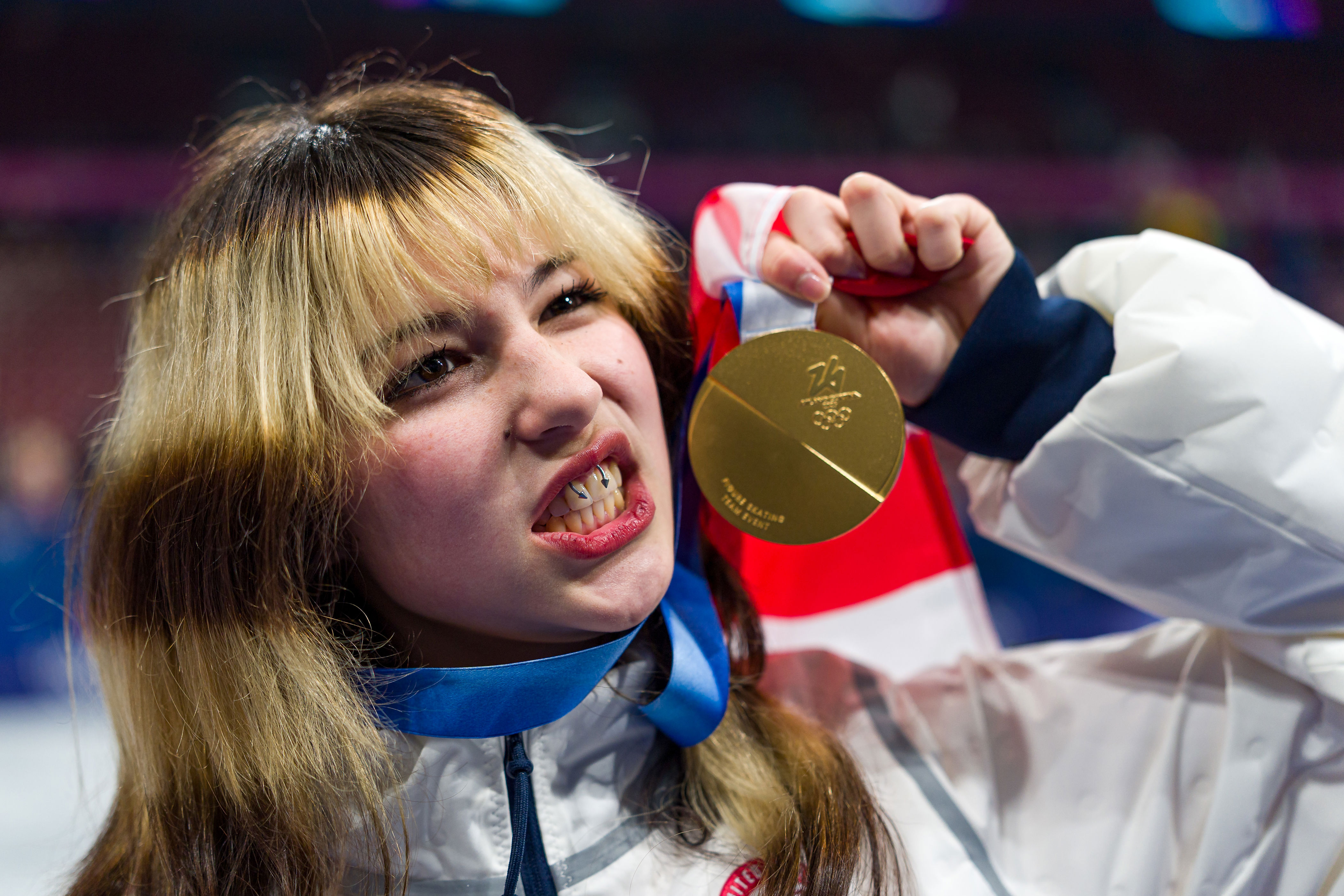
U.S. figure skater Alysa Liu shared her experience with fans on TikTok, posting a video that showed her team event gold medal detached from its ribbon.
“I just got this Olympic gold medal, already broke it,” she wrote in the caption of the video, which quickly drew widespread attention online.
The medals used at Milan-Cortina feature a minimalist design intended to resemble “discs of ice,” made from two halves joined through the Olympic and Paralympic symbols at the center.
Organizers have said the design represents both the individual athlete and the broader network of family, coaches and teammates behind their success. Each medal has contrasting textures, with one frosted surface and one polished.
Potential Causes
According to organizers, gold and silver medals each weigh about 1.1 pounds, while bronze medals weigh approximately 0.9 pounds.
Some athletes and observers have speculated that the weight of the medals, combined with the ribbon’s breakaway safety mechanism, could be contributing to the damage.
Cold temperatures may also be playing a role, potentially making the metal coating more brittle and more vulnerable.
Milan-Cortina 2026 Chief Games Operations Officer Andrea Francisi said officials are taking the complaints seriously.
‘Highest standards of quality’
“Following reports of issues affecting a small number of medals, the Organizing Committee immediately reviewed the matter, working closely with the State Mint, which produced the medals,” the Milano-Cortina Media Relations Team said in a statement to Newsweek.
“A solution has been identified, and a targeted fix has been put in place. Athletes whose medals have been affected are encouraged to return them through the appropriate channels so that they can be promptly repaired and returned.
“Milano Cortina 2026 remains fully committed to ensuring that medals, which represent the pinnacle of every athlete’s journey, meet the highest standards of quality and care.”
The issue follows similar concerns raised at the Paris 2024 Summer Olympics, where athletes reported tarnishing and discoloration of medals. In that case, organizers replaced damaged medals.
Newsweek has reached out to the Olympic Committee for comment via email.
To read how Newsweek uses AI as a newsroom tool, click here.
Related Articles