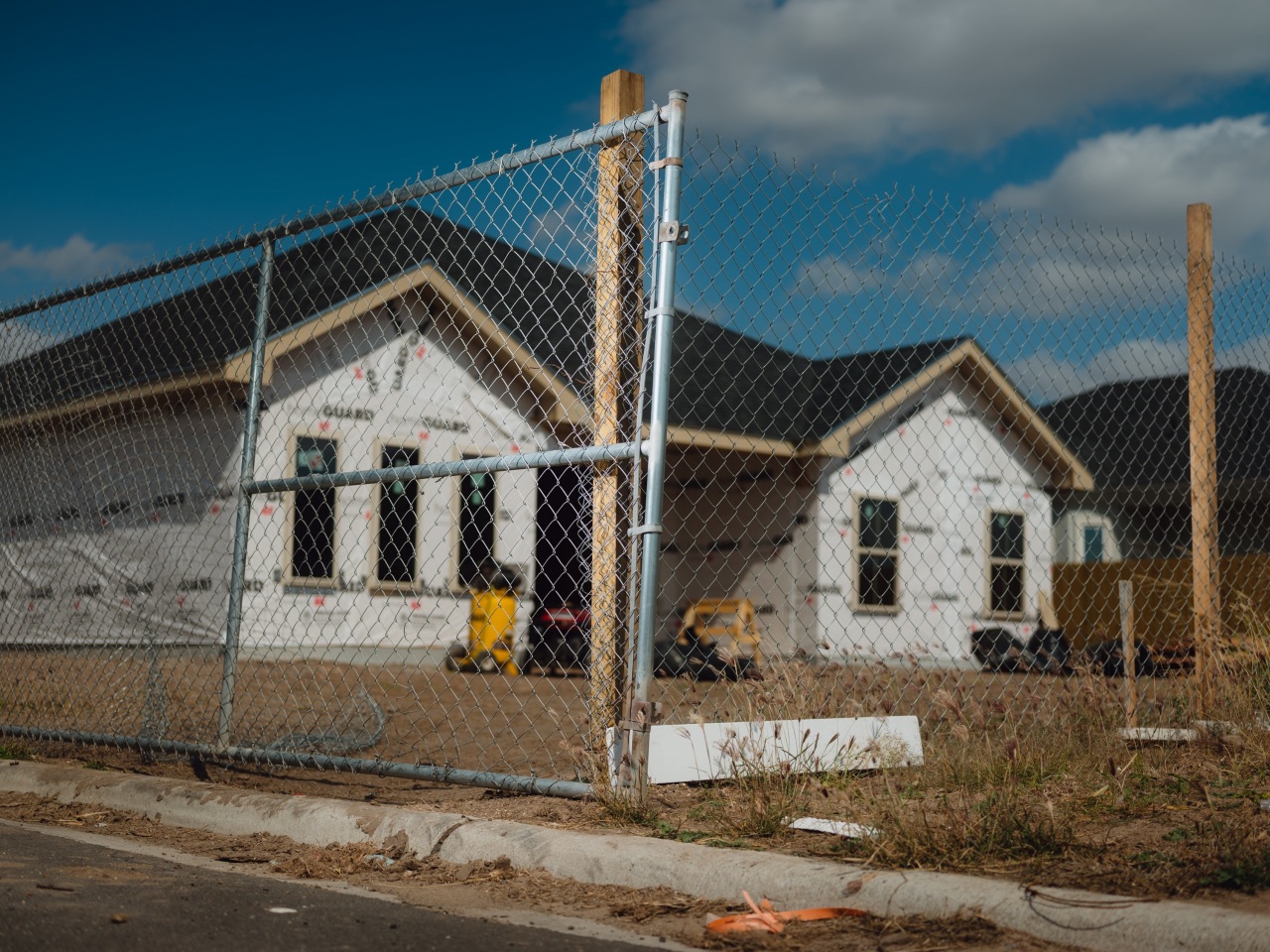
WESLACO, Texas—At Monte Cielo, a new housing development in this growing region of South Texas, half-built homes are sitting empty. On a recent day, just a few workers hovered behind temporary wrap tacked to wall frames.
The quiet scene comes after federal immigration agents have hit the development repeatedly, carrying out at least half a dozen raids there in recent months, builders said. The most recent was a few weeks ago. Some eight workers were arrested in a chaotic scene of laborers running away from federal vehicles racing through the three-street subdivision at high speed, the builders said.
The result? Homes are months behind schedule, and contractors face an uphill battle to recruit more workers to finish them.
“They hear Monte Cielo and say ‘No, no. You can pay me whatever you want, but I’m not going to go work there,’” Alejandro Garcia, one of several builders with homes under way in the development, said of the challenges in trying to hire workers.
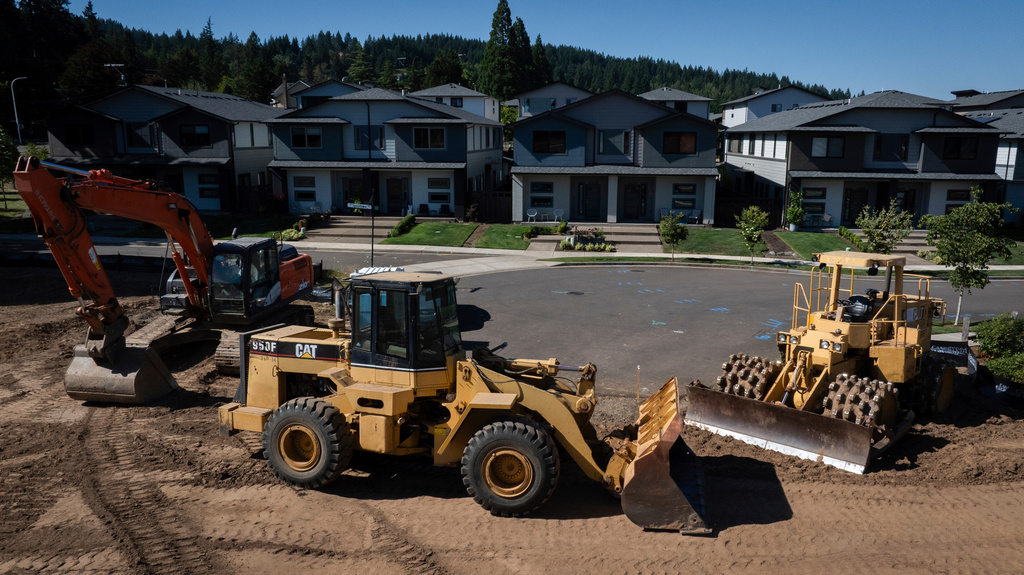
The situation is becoming familiar across the Rio Grande Valley, where trade groups are raising alarms about aggressive immigration enforcement wreaking economic havoc. Construction delays threaten higher prices for buyers and lower margins for builders. Some builders said they just hope to break even on delayed projects. Materials suppliers are laying off employees. One local concrete company filed for bankruptcy protection, citing a drop-off in sales because of immigration raids as the reason.
“They are basically taking everyone in there working, whether they have proper documentation or not,” said Mario Guerrero, chief executive of the South Texas Builders Association. Guerrero added that he voted for President Trump, along with most of the region, and supports deportations of criminals, but “when you are terrorizing jobsites, people are afraid to go to work.”
South Texas is a heightened example of what contractors are facing across the country in areas where U.S. Immigration and Customs Enforcement activity has intensified. Home builders in Minnesota relayed similar experiences of raids picking up whole work crews, even those with legal documentation, said Grace Keliher, executive vice president of the Builders Association of Minnesota. Nationally, a third of commercial contractors reported being affected by immigration-enforcement actions in the past six months, according to a January report by trade group Associated General Contractors of America.
ICE didn’t respond to a request for comment.
The situation here highlights how two of Trump’s priorities—curbing illegal immigration and strengthening the economy—can come into conflict with one another. Hidalgo County, which comprises some 22 cities including Weslaco, McAllen and Mission, is growing at twice the rate of the U.S. as a whole, according to census data, from 870,000 people in 2020 to 915,000 people in 2025. McAllen Mayor Javier Villalobos said he is concerned about the raids raising home prices and putting a damper on new business investment.
“It affects everybody,” said Villalobos, a Republican. “We’re still doing well, but we know what happens if it continues.”
Pain in construction industry
In 2024, immigrants—both with and without legal status—accounted for more than half of construction-trade workers in Texas, California, New Jersey and the District of Columbia, according to Riordan Frost, a senior research analyst at the Harvard Joint Center for Housing Studies. Builders said that is much higher in the Rio Grande Valley, a four-county border region where residents have always lived and worked, going back and forth to the larger cities south of the border.
Moreover, the raids occurring now are netting not only immigrants in the country illegally, but also those with legal authorization, builders said.
Two guards at a nearby immigration detention center said they frequently see detainees come in still wearing dusty work clothes from construction jobsites. A significant portion of the men they now guard have valid work permits, they said, which they haven’t seen in previous administrations, but those detainees still wait weeks to see a judge before being released.
Because of that, people are afraid to work whether they have legal authorization or not, a reality that has hit the industry and broader regional economy hard. Paul Rodriguez, CEO of Valley Land Title, estimated that residential construction activity fell 30% in recent months in Hidalgo County.
57 Concrete, a large regional concrete supplier, saw concrete use fall 60% between late May and November as home builders lost workers and were unable to move forward with construction, CEO Eliud Cavazos said. The Mission, Texas-based company had to lay off 60 of its 150 workers, shut a department focused on continuous improvement and halt new investment, Cavazos said.
The five-year-old company filed for chapter 11 bankruptcy reorganization in December, citing the drop in demand coinciding with immigration raids.
The chapter 11 filing “is the most responsible thing I can do,” Cavazos told The Wall Street Journal. He said that his employees, who are all U.S. citizens or have legal work status, would frequently witness immigration raids when delivering products. Sometimes that meant builders were left with half-poured foundations that they would have to pay to rip out and redo as laborers were arrested mid-job.
Lost sales
At Materiales El Valle, a local tile supplier, the ICE crackdown has resulted in $5.3 million in lost sales, said Luis Rodriguez, who manages the company his father-in-law started four decades ago. He laid off two drivers and four sales representatives and reduced hours for most of the remaining 39 employees, the first layoffs in the company’s history.
Rodriguez said he is used to immigration enforcement at jobsites, but under previous administrations it was to arrest particular people, he said. Now, agents are targeting everyone.
Pallets that should have been picked up within 24 hours have now been sitting in his parking lot for months. The company took out a $1.3 million credit line to pay for tile that contractors ordered but never picked up because they couldn’t find workers. Two crews of installers, who previously spent their time upgrading the company’s four showrooms, now install tiles for customers who can’t find workers.
Rodriguez traded his F-150 pickup for a more modest model and is thinking about downsizing to a smaller home. He’s also trying to fill the labor gap by reaching out to local community colleges and offering tile-installation workshops. “Nobody is coming forward,” he said.
Local lenders said loan demand has weakened, and they have tightened their standards. “It has deterred further investment. It has stalled projects,” said Art Ortega, chairman and CEO of Freedom Bank, a community bank specializing in small-business loans.
Help in Washington
Trade groups have held emergency meetings with hundreds of members in recent months and leaned on local lawmakers for support. Guerrero and others from the South Texas Builders Association flew to Washington, D.C., last week for meetings in an effort to reduce enforcement activity on construction jobsites.
Democratic Rep. Henry Cuellar helped the group set up meetings. He and Texas GOP Rep. Monica De La Cruz joined as co-sponsors on a bill brought by Pennsylvania Rep. Lloyd Smucker, a Republican, to address labor shortages by creating a new nonimmigrant visa available to employers who prove their positions have gone unfilled for three months.
At Monte Cielo and another development down the road in Weslaco, Johnny Vasquez, executive officer of the Rio Grande Valley Builders Association, observed flaws in newly lain sidewalk, saying that the immigration raids are leading to poor quality of work because workers with decades of experience are arrested and contractors scramble for inexperienced replacements. He noted the oddity of silent construction sites, where workers would normally be playing music.
ICE agents can be refused entry to private property without a judicial warrant, so builders have begun putting up temporary fences—another cost—around their lots, but they said some workers panic or worry agents will enter the site anyway.
Looking at a framed house with materials stacked on the roof and no workers in sight, Vasquez ticked off the people affected, from lenders and smaller contractors to home buyers.
“If nobody comes back to finish out this house, a lot of people are going to lose out,” he said.
Write to Elizabeth Findell at elizabeth.findell@wsj.com and Ruth Simon at Ruth.Simon@wsj.com