(Bloomberg) -- Lea en español
The capture of Venezuelan President Nicolás Maduro in a US military raid on Jan. 3 has accelerated US efforts to isolate Cuba, Venezuela’s closest regional ally. “If I lived in Havana, and I was in the government, I’d be concerned,” Secretary of State Marco Rubio said the same day.
For years, Venezuela was Cuba’s main source of oil, a lifeline that helped keep the island’s economy running. The US cut off that support after ousting Maduro, leaving Mexico as Cuba’s main supplier. But in late January, Mexico halted shipments, citing President Donald Trump’s threat to impose tariffs on countries that supply oil to Cuba, and fuel imports to the island reached zero for the first time since 2015.
As a result, Cuba’s long-running economic crisis has deepened to one of its worst points in decades. Shortly before issuing the tariff threat, Trump said “Cuba will be failing pretty soon.” But the island nation, just 90 miles from Florida’s coast, has defied dire predictions before.
What is Cuba’s relationship with Venezuela?
When Maduro’s predecessor, President Hugo Chavez, took power in the South American nation in 1999, he quickly embraced Cuban leader Fidel Castro as his political godfather. For years, the two men helped reshape politics in Latin America and the Caribbean, ushering in a wave of leftist leaders. In the process, oil-rich Venezuela became Cuba’s principal benefactor. At one point, Venezuela was sending more than 100,000 barrels per day of highly subsidized fuel to keep the country afloat. In exchange, Cuba sent doctors, teachers and security personnel to Venezuela. Castro called Chavez “the best friend that Cuba has ever had in its history.”
That patron-client relationship endured after Chavez died in 2013. Maduro sustained oil shipments and political backing for Havana even as Venezuela’s own economy collapsed. When Maduro was captured at his residential bunker, at least 32 Cuban security forces were killed, the government in Havana said.
Can Cuba’s economy survive without Maduro in power?
While Maduro is facing trial in New York on narco-terrorism charges, his Vice President Delcy Rodriguez is at the helm. For the moment, she is operating with Washington’s blessing, but also largely under Washington’s control. Caracas’s decision to stop sending fuel to Cuba is already decimating the island’s economy. Gasoline is being rationed, the nation is covering less than half of its electricity needs, tourist resorts are being shuttered, and the government has told airlines they won’t be able to refuel. The crisis is worsened by Mexico’s decision to halt its oil shipments.
Experts have warned that the US pressure campaign will exacerbate chronic shortages of food, medicine and other essential goods. While some nations, including China and Russia, have pledged to provide humanitarian aid to Cuba, it’s unclear if that help can stave off economic collapse. Under the threat of tariffs, no country has volunteered to replace Mexico in supplying the country with oil.
What would the Trump administration gain from the collapse of Cuba’s government?
Successive US administrations have tried to topple the communist regime in Havana — or force it to change. But perhaps no president has turned the screws quite like Trump. Driven in part by Rubio — born in Florida to Cuban parents — the administration has ratcheted up sanctions and pressured Cuba’s neighbors to scale back reliance on Cuban medical missions, another source of income for Havana.
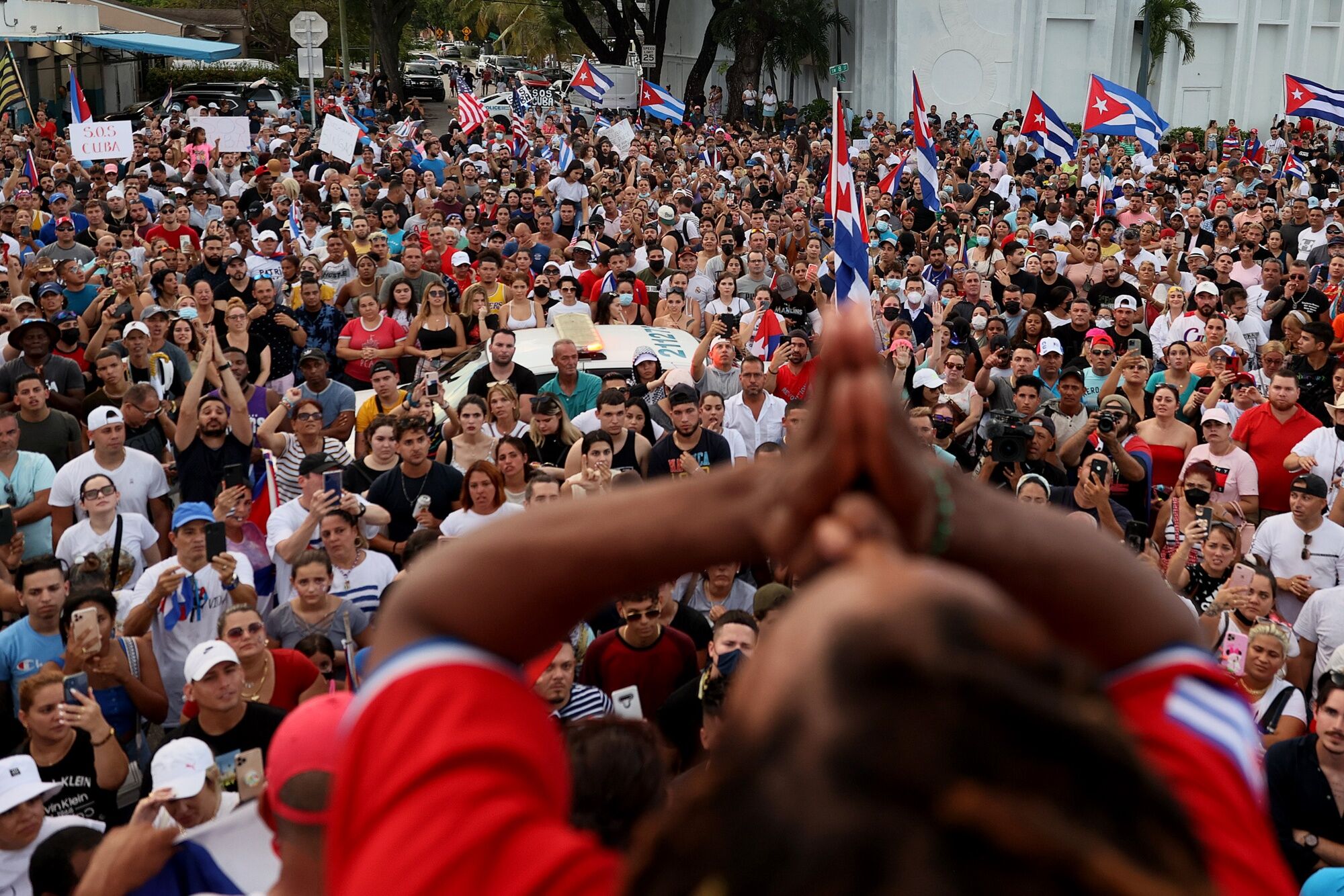
Why? Cuban Americans are a powerful voting bloc in South Florida, and that community has long advocated for the downfall of the regime. If Rubio were the one to pull it off, it would help make him a Republican front-runner in future elections.
And in Washington, Cuba is seen as a platform for China, Russia, Iran, and other US foes on Florida’s doorstep. Some US leaders see regime change as a way to blunt this influence.
What are the risks for the US?
Successive crises in recent decades have driven waves of Cuban migrants to US shores. In 1980, more than 125,000 Cubans arrived in Florida over the course of just a few months in what was known as the Mariel boatlift. The current exodus from the island, which began during the Covid-19 emergency and soon surpassed Mariel, shows no signs of abating. If the government in Cuba collapses entirely, it could spark a still greater migration wave and a humanitarian crisis on Florida’s doorstep.
A failed Cuba could also destabilize other parts of the Caribbean and Latin America. And there’s no telling how China and Russia might react to the fall of one of their longest-standing ideological allies in the Western Hemisphere.
--With assistance from Stephen Wicary.
More stories like this are available on bloomberg.com
©2026 Bloomberg L.P.