A team of scientists at the University of Chicago has launched a groundbreaking experiment in search of ultrahigh-energy neutrinos, particles from deep space that could unlock the mysteries of some of the universe’s most extreme events.
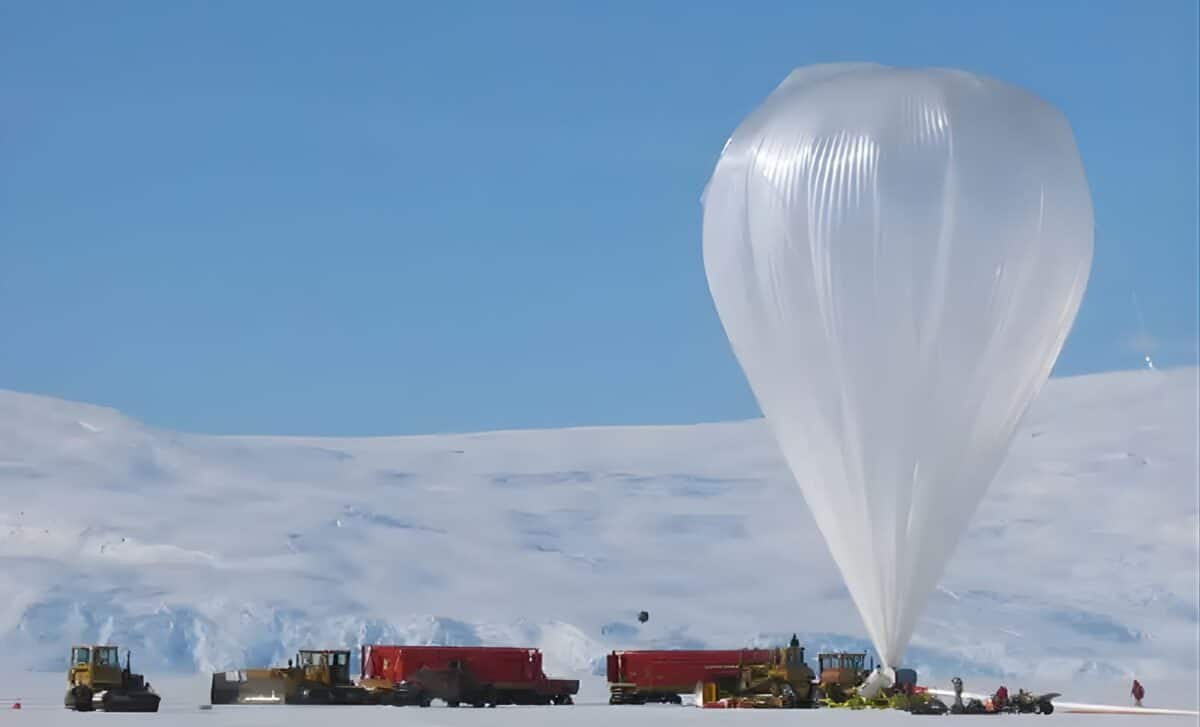
The mission, called PUEO (Payload for Ultrahigh Energy Observations), launched from Antarctica on December 20, 2025, and soared to an altitude of 120,000 feet aboard a NASA balloon. After 23 days in the air, the payload safely returned on January 12, 2026, with a treasure trove of data that could reveal new cosmic phenomena.
PUEO is part of NASA’s inaugural class of Astrophysics Pioneers missions, a program designed to push the boundaries of space research. The mission’s primary goal is to detect energetic neutrinos, rare particles that can travel across the universe.
An Instrument Like No Other
Building the PUEO payload was no small feat. Over five years, scientists from institutions across the globe, including six U.S. universities, as well as partners in Europe and Asia, came together to create an instrument capable of detecting these elusive neutrinos.
According to Cosmin Deaconu, a research professor at UChicago, the key innovation of PUEO lies in its combination of 96 highly sensitive radio antennas, designed to capture faint radio waves produced when a neutrino collides with an atom in the Antarctic ice. To ensure the instrument could function in extreme conditions, the team tested PUEO at a NASA facility in Texas, where they simulated near-space conditions.
After final checks, the payload was shipped across the world, from Texas to New Zealand, and finally flown to Antarctica for its launch. The balloon’s launch, though successful, was a tense moment for the team. According to Keith McBride, a postdoctoral researcher at UChicago:
“The balloon and payload are so long that if you have strong variation in layers of the atmosphere, you could be in trouble.”
The Balloon Flight: A Delicate Dance
Once in the air, PUEO’s work began. The balloon took the payload to its operational altitude of 120,000 feet, where it began its quest to detect energetic neutrinos. However, this was no autonomous mission. Scientists had to monitor the instrument around the clock, adjusting for unforeseen problems such as slower-than-expected rotation, which caused the sun to heat one side of the instrument for too long. These heat fluctuations could have damaged the delicate electronics, so the team worked tirelessly to prevent overheating.
As explained in the University of Chicago’s report, despite these challenges, PUEO operated smoothly throughout its flight. The payload’s solar panels extended as planned, and additional antennas deployed to further boost sensitivity. AsRachel Scrandis, a graduate student at UChicago and PUEO’s Radio Frequency electronics lead, put it:
“There is something so exciting (and a little unnerving) seeing the last five years of your work float away.” she added, “We built PUEO to be the world’s most sensitive experiment to ultrahigh energy neutrinos, but after launch, we are at the mercy of the winds to carry us over ice that will let our experiment shine.”
Retrieving the Data: The Real Work Begins
After more than three weeks in flight, PUEO was gently brought back to Earth, landing about 200 miles from the South Pole. The mission’s real payoff, however, lies in the data collected during that time. According to the team, the data retrieval process was a race against time, as the payload contained 50 to 60 terabytes of information about potential neutrino interactions. Scientists are now tasked with sorting, calibrating, and analyzing the data to uncover whether PUEO succeeded in detecting the elusive high-energy neutrinos.
Although it may take up to a year to fully analyze the results, the scientists are hopeful that the data will provide them with new insights into the extreme events occurring throughout the universe. As McBride noted:
“It’ll probably take us a month just to run the numbers on the computer—it’s that much data.”
Until then, the team is resting easy, knowing that their mission was a significant step forward in understanding the universe’s most energetic phenomena.
Enjoyed this article? Subscribe to our free newsletter for engaging stories, exclusive content, and the latest news.