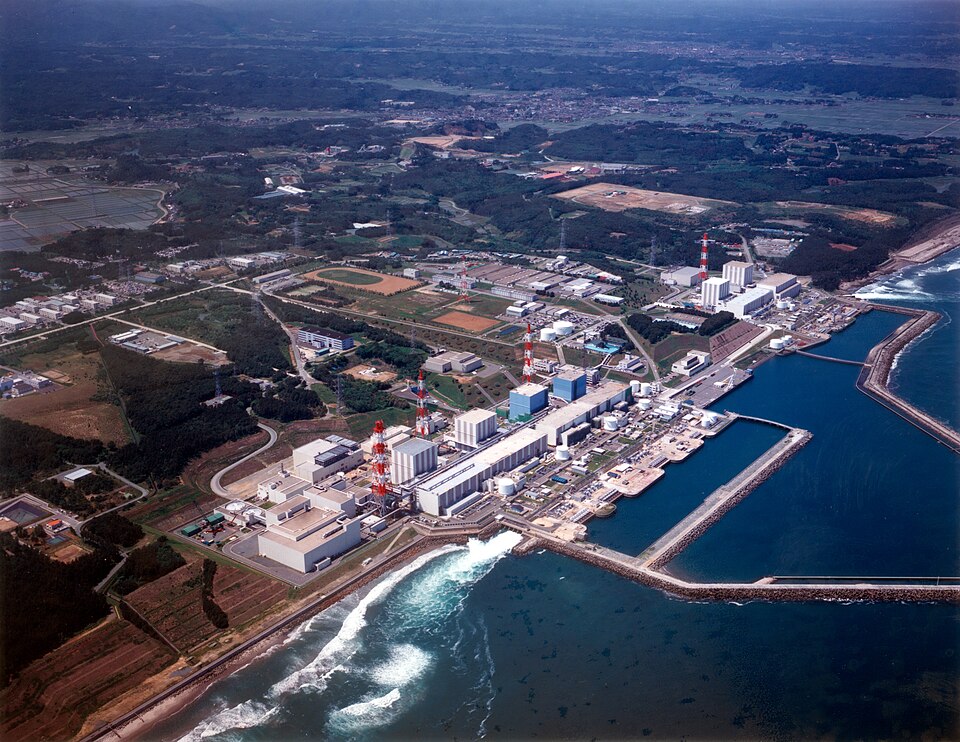
The most troubling inhabitants at Fukushima Daiichi are not theatrical mutants and engineers who intend to begin their decades-long decommissioning work, but the type of microbes which inhabits normal seawater.
Researchers found massive growth of microorganisms in floodwater in rooms under the damaged reactors where water was exposed to the unremitting ionizing radiation. The location is the torus room of the plant, where pressure-suppression water was stored beneath the reactor buildings following the disaster in 2011 and which remained in situ. What appeared as oily pads in that subterranean infrastructure was in fact a good community one that made a standard notion of what radiation chooses difficult.
When Tomoro Warashina and Akio Kanai, two biologists, studied samples of this water that is very radioactive, they expected the common cast of famously hard organisms. Rather, genetic profiling identified bacteria dominated by Limnobacter and Brevirhabdus with low levels of iron oxidizers including Hoeflea and Sphingopyxis. That is, it was not a collection of specialist radiation champions but an assemblage of functional, “working” microbes, chemistry-driven, oxidizers of inorganic compounds. The shock of researchers has been summed up by one of the research lines: “The proportions of bacterial genera known to be radiation resistant were extremely low, suggesting that the impact of radioactivity on selection within the torus room water was minimal,”
The question which is immediately relevant is not whether life can continue around nuclear contamination, because of the previous experience of other exclusion zones, that it can, but how it continues within a piece of nuclear equipment. Less exotic genetics and more architecture is the most likely explanation of this situation. The team associated survival to biofilms on metal surfaces: collections of microbes entrenched in an extracellular matrix that may serve as physical and chemical buffer. That layer of slime in a built world full of steel, pipes, and submerged equipment is a micro-habitat, which can cushion the exposure and concentrate food, enabling otherwise unmemorable microbes to continue replicating.
This is important since in part, decommissioning is a struggle with time and chemistry. Biofilms are not inert; they have the ability to modify the rates of corrosion, alter the local pH, and obscure water with suspended flora all of which can impact the inspection and cleaning processes in the underwater areas. Experience with previous decommissioning of nuclear plants emphasized the fact that microbes could impede the work by increasing the rate of corrosion as well as making the biological activity of water less visible and become an operational issue and not a biological mystery.
It has a larger meaning, ecological and engineering-based simultaneously: radiation is not the habitat. Long-term studies of landscapes in contamination have underscored that results are determined by patches of circumstances- dose rates, water flow, material surfaces, nutrient imports, and the nonoccurrence or occurrence of disturbance- forming what some scientists refer to as “a new ecology” other than a straightforward history of collapse or recovery. The torus-room microbiome of Fukushima concentrates that concept into one industrial chamber; a very extreme environment, where the power to construct a protective community upon infrastructure, rather than the power to shrug off radiation alone, could be favored. Eventually, the weird aspect is not the fact that there is something alive there. That anyone should find it so hard to get out of so commonplace is the question.