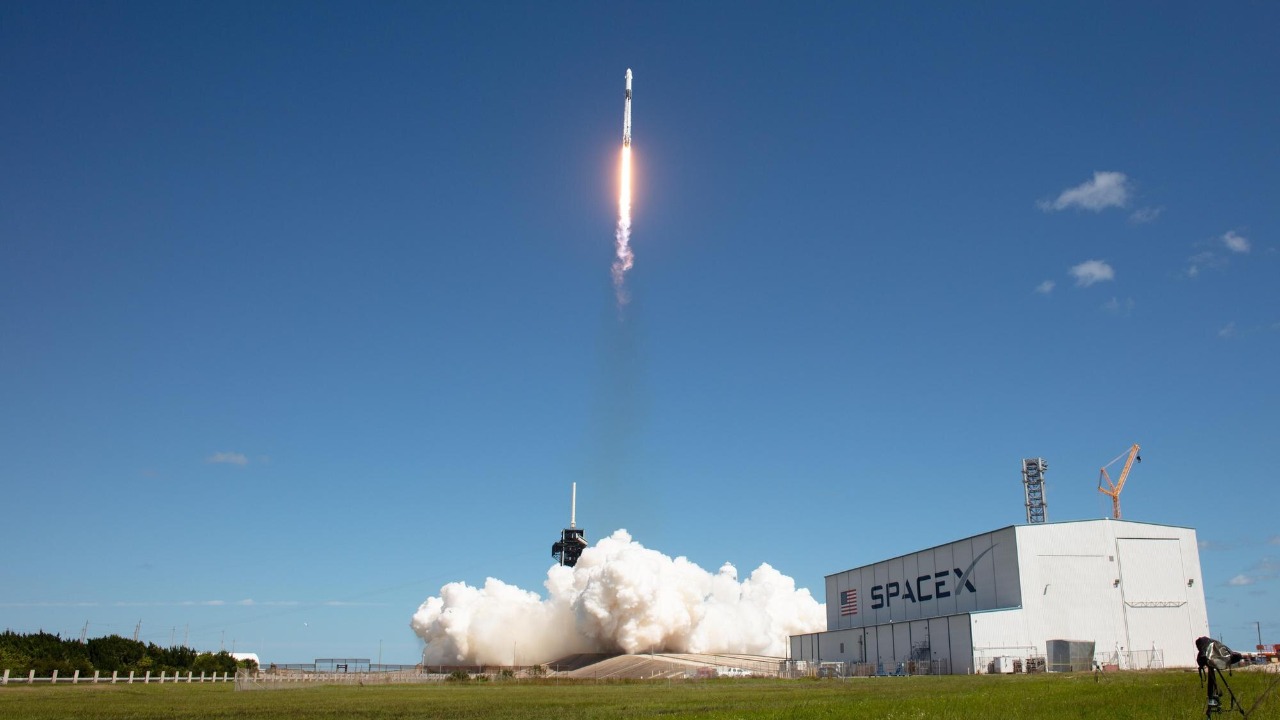
SpaceX is quietly adding a new kind of machine to its arsenal in Florida, not a rocket or a satellite but a cyclotron particle accelerator capable of firing protons at energies used in medical and research facilities. Instead of treating cancer patients, this 230 MeV class hardware is being repurposed to blast spacecraft electronics with radiation that mimics the harshest orbits. The move fits a familiar pattern: a company that already builds its own engines, fairings, and software is now pulling one of the most specialized parts of space qualification testing in-house to control cost, schedule, and risk.
The stakes are larger than a single lab. As SpaceX scales Starlink, pursues government-focused Starshield services, and pitches orbital data centers, the reliability of its electronics under cosmic punishment becomes a strategic bottleneck. Owning a cyclotron is not just an engineering flex, it is a bet that faster, cheaper radiation testing will let the company fly more advanced chips, including AI processors, than rivals that still queue for time at shared facilities.
Inside SpaceX’s Florida cyclotron bet
Public hints of the project surfaced in a job listing for an Electronics Test Engineer that described a new cyclotron facility in Florida dedicated to radiation testing across all SpaceX vehicles. The description framed the accelerator as part of a broader push to internalize space radiation studies, with the role focused on qualifying hardware for Dragon crew and cargo missions, Starship, and satellite platforms. That language signals that this is not a side experiment but a core infrastructure play, designed to sit alongside engine test stands and launch pads as a permanent part of the company’s workflow, as reflected in the Electronics Test Engineer posting.
Separate reporting indicates that SpaceX has picked up a powerful 230 M class cyclotron facility in Florida and plans to use it to test electronics for rockets and satellites, including Dragon, Starship, Starlink, and more. That 230 M energy level is typical of machines used to simulate the high energy protons that cause many of the most damaging effects in orbit, from bit flips to permanent latchups. By owning the site outright, rather than renting beam time, SpaceX can run campaigns whenever a new chip, board, or subsystem is ready, instead of batching tests around scarce external slots, as noted in coverage of the Florida facility.
Why radiation is the new launch bottleneck
Radiation is not a vague hazard but a specific set of failure modes that haunt every modern spacecraft designer. Agencies describe radiation effects, including total dose, latchup, and single event upsets, as one of the main concerns for space microelectronics, because a single charged particle can corrupt memory, lock up a processor, or slowly degrade materials. That risk is magnified in high altitude orbits and around planets with strong magnetic fields, where trapped particles bombard hardware for years, a reality captured in technical guidance on Radiation effects.
At the device level, single event effects are a known source of error in spacecraft microelectronics, caused by the passage of high energy charged particles through sensitive regions of a chip. These events can flip bits, induce transient currents, or in extreme cases trigger destructive latchups, sometimes without leaving permanent damage but still compromising mission data. Detailed models of Single event rates underpin how engineers size shielding, choose components, and design error correction, and they depend heavily on test data that a cyclotron can generate.
From rented beams to vertical integration
Until now, companies like SpaceX have relied on a small number of external facilities to perform radiation testing, often sharing beam time with defense contractors, universities, and other satellite builders. That model works when launch cadence is modest, but it becomes a chokepoint when a firm is iterating hardware as quickly as SpaceX, which is already qualifying electronics for Dragon crew and cargo missions, Starship, and Starlink constellations. The “Why Build This Now” framing in local reporting captures the shift from occasional campaigns to continuous qualification as the company scales its fleet, a point underscored in the discussion of Why Build This.
This move also fits SpaceX’s broader pattern of vertical integration, where it designs and manufactures engines, structures, avionics, and software in-house to control cost and schedule. Analysts have long noted that it is really hard to compare SpaceX to other launch providers because They capture so much of the value chain internally and are willing to spend heavily on R&D to get there. That same logic now extends to radiation labs, with the cyclotron joining factories and test stands as another capital intensive asset that supports rapid iteration, as fans and critics alike have observed when dissecting how They operate.
AI hardware, Starshield, and the orbital data center dream
The real strategic prize is not just more robust electronics but the ability to fly cutting edge commercial chips, especially AI accelerators, in orbits that would normally destroy them. Industry briefings note that most advanced commercial electronics, such as AI processors and high powered GPUs, fail in space due to radiation and thermal constraints, forcing operators to fall back on older, rad hardened parts that deliver less performance than commercial hardware. Companies working on shielding and packaging are trying to close that gap, but the basic tension remains, as highlighted in analysis of how Most advanced chips behave in orbit.
SpaceX has already signaled ambitions that go far beyond broadband, filing a proposal to launch and operate one million small satellites as a data center in space. Running anything like that vision would require dense, power hungry compute nodes that can survive long term exposure to radiation while executing AI workloads for routing, sensing, and customer applications. The cyclotron gives SpaceX a way to screen and harden candidate processors for such a “cloud in orbit” concept, potentially letting it move faster than competitors that still depend on slower external test loops, a point that becomes concrete when you read about the proposed data center constellation.
Starlink, Starshield and the national security angle
On the operational side, the accelerator is poised to benefit Starlink, SpaceX’s broadband beaming satellite network, which depends on thousands of identical spacecraft operating reliably for years. Reporting on the cyclotron project notes that it is intended to support Starlink satellites as well as rockets, and that SpaceX’s VP of Starlink, Michael Nicolls, has been recruiting elite engineers for radiation testing roles. That focus on a mass produced constellation, rather than a handful of bespoke satellites, makes the economics of an in-house beamline more compelling, as hinted in coverage of Starlink leadership.
The same infrastructure will almost certainly feed into Starshield, the government focused platform SpaceX is building to host national security payloads and services. Official descriptions emphasize that Starshield is designed for secure communications, Earth observation, and hosted payloads for government customers, leveraging the same production lines that build commercial satellites. Those missions often fly in higher radiation environments and carry more sensitive instruments, making rigorous qualification essential, and the cyclotron gives SpaceX a way to demonstrate that its hardware meets demanding standards for the Starshield platform described on its own site at Starshield.
More from Morning Overview
*This article was researched with the help of AI, with human editors creating the final content.