Russian units on the front lines in Ukraine have been jolted by the sudden loss of Starlink connectivity, a disruption that Ukrainian officials say has slashed assault activity and exposed how deeply Moscow’s war machine depended on a private American network. Within days, Russian commanders began rushing alternative satellite internet hardware to the battlefield, a scramble that reveals both a short‑term communications crisis and a longer‑term strategic pivot toward non‑Western space infrastructure. I see this as a stress test of Russia’s entire digital warfighting model, one that could accelerate new alliances and domestic projects but at the cost of immediate battlefield effectiveness.
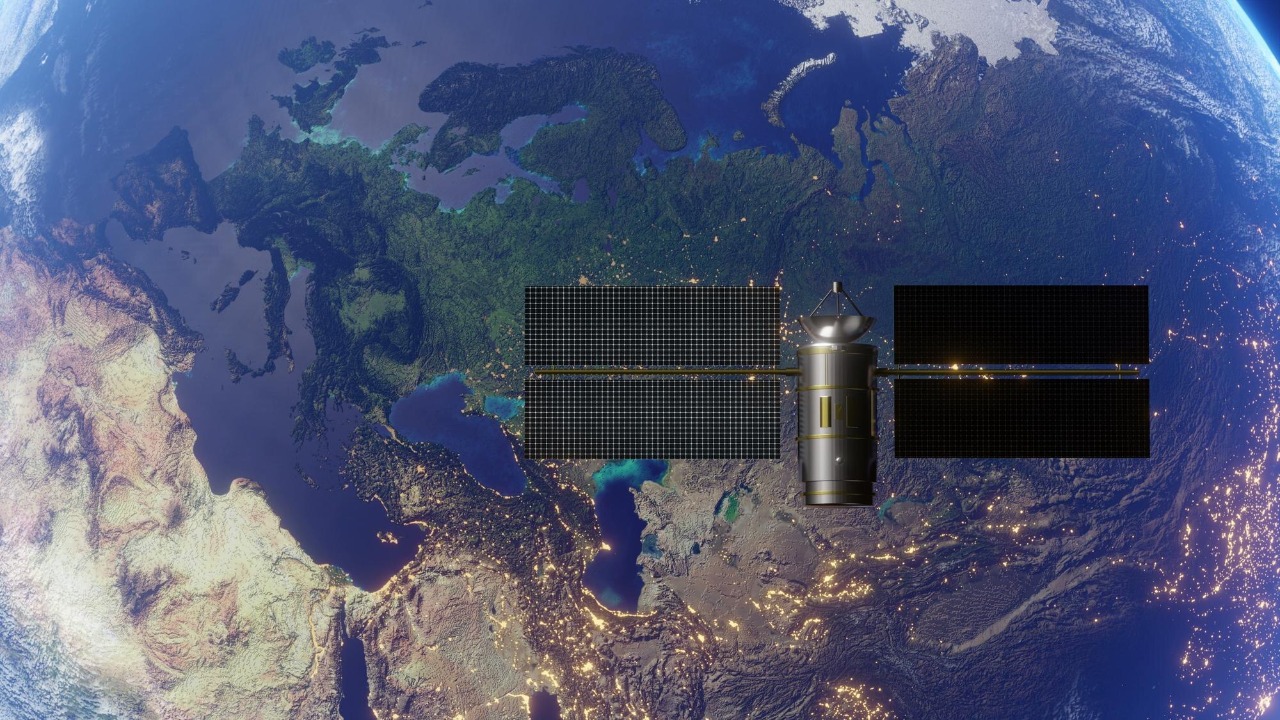
The shutdown has turned satellite internet from a quiet enabler into a visible fault line in the conflict, with Elon Musk and Starlink suddenly central to operational planning in Moscow and Kyiv alike. The race to field new terminals, revive old radios, and revive delayed constellations like The Rassvet and Zorky is not just about bandwidth, it is about who controls the on‑off switch of modern war.
The day Starlink went dark for Russia
According to Ukrainian officials, Russian forces had been using Starlink terminals acquired outside official channels to coordinate everything from artillery spotting to small‑unit maneuvers. When those terminals were deactivated, Serhiy Beskrestnov, an adviser to the defence minister, described the impact as a catastrophe for Russia’s military and said “All communications, control, and logistics” were affected, a sweeping assessment that underscores how central the network had become to Russian command and control, even though it was never intended for that purpose in Moscow’s hands. Ukrainian sources near the front also told international reporters that Russian units were suddenly facing severe communications problems and scrambling for alternatives.
Reports indicate that the decision to cut access came after SpaceX CEO Elon Musk moved to block Russian use of the system, leaving only terminals registered in Ukraine functioning and stripping Russian formations of a key battlefield advantage they had quietly developed. One account quoted Ukrainian officers saying Russian troops “are like blind kittens” after Musk blocked Starlink access, a vivid metaphor that captures how quickly a high‑tech force can be reduced to guesswork when its digital nervous system is severed. In the face of the outage, Russian units have turned to traditional radio communications and other improvised means, a shift that makes them easier to intercept and jam and that forces commanders to rethink how they synchronize operations across a sprawling front.
From crowdfunding radios to rushing new terminals
The immediate fallout has been messy and revealing. Ukrainian observers say Russian troops have resorted to crowdfunding campaigns to buy basic radios, a striking image of a major power’s soldiers appealing for donations of old‑fashioned equipment just to stay in touch. Ukraine’s General Staff has unofficially concluded that Russian forces saw their assault numbers drop by half after Starlink went dark, and that these attacks were already yielding diminishing territorial returns even before the outage, suggesting that the communications shock hit an offensive that was losing momentum rather than one in full stride.
At the same time, Russian commanders are not simply accepting a return to the analog age. Russian forces have begun urgently receiving satellite internet terminals with dish diameters of 60 to 120 cm, according to reporting that cites Andrii Konyk, indicating a rapid procurement push for alternative systems that can be deployed at scale. Separate coverage notes that Russian troops had relied on Starlink for fast, low‑latency links and are now watching those systems be shut off, which explains the rush to get new hardware into trenches and command posts. For ordinary readers, the picture is a bit like a delivery company that built its entire routing system on a single navigation app, only to see its account abruptly disabled and drivers forced back to paper maps while management scrambles to install a rival platform.
Russia’s delayed constellations: The Rassvet and Zorky
The scramble on the ground is colliding with delays in orbit. Earlier this year, Russia postponed the launch of the first batch of satellites for The Rassvet project, a planned Starlink rival funded under the Data Economy National Project. The federal budget has allocated 102.8 billion rubles ($1.3) for this effort, with financing to be disbursed as project milestones are reached, but the postponement highlights how far behind Moscow remains in fielding a dense, low‑Earth‑orbit constellation that could match Starlink’s coverage and resilience. In effect, the war has arrived at a phase where Russia needs a system it has not yet finished building.
In parallel, Russia is gearing up to challenge Starlink with another domestic satellite internet system dubbed Zorky, which is being developed by Roscosmos as part of a broader push to provide nationwide connectivity without relying on foreign satellites. Additional reporting notes that Moscow is beginning to build a satellite constellation whose first spacecraft is the “Zorkiy” satellite, signaling that serial production is underway even if full operational capability is still some distance away. This dual‑track approach, with both The Rassvet and Zorky in motion, suggests that Russian planners anticipated the strategic vulnerability of depending on Western commercial networks, but the Starlink cutoff has exposed the gap between ambition and deployment.
New spy satellites and the hunt for non‑Western partners
Even as ground units struggle, Russia is still putting hardware into orbit. Amid the communications disruption, one report notes that Russia launched a new spy satellite aboard a Soyuz‑2.1b rocket from the Ple spaceport, a reminder that its legacy space infrastructure remains active and that military reconnaissance missions are continuing despite the Starlink shock. This kind of launch does not solve the immediate problem of frontline internet access, but it does show that Moscow is trying to preserve strategic capabilities in parallel with its scramble to restore tactical connectivity.
There is also a geopolitical dimension that I think has been underplayed. Analysis of Russia’s Zorky plans emphasizes that the system is intended to provide broadband coverage without relying on foreign satellites, a goal that naturally aligns with the interests of other BRICS members that want to reduce dependence on Western space infrastructure. It is reasonable to expect that the Starlink deactivation will push Russia to deepen cooperation with non‑Western tech providers, from satellite bus manufacturers to ground‑segment integrators, even if the precise partners are not yet documented in public sources. Over the next few years, I would expect hybrid satellite systems that blend Russian constellations with friendly foreign capacity to emerge, creating a patchwork alternative to Western‑dominated networks.
How much did Russia really rely on Starlink?
One of the dominant assumptions in early coverage has been that Russian use of Starlink was marginal or opportunistic, but the pattern of disruption suggests something deeper. Detailed analysis of the invasion force indicates that Russian units had integrated Starlink terminals into their communications architecture to such an extent that losing them produced chaos, with one expert noting that only terminals registered in Ukraine will work and that Russian attempts to spoof or repurpose them have been blocked. Ukrainian military sources told reporters that Russian units were experiencing severe communications problems and were attempting to reconfigure their networks, which is not the behavior of a force that had only dabbled in the technology.
At the same time, the way those terminals entered Russian hands matters. Investigations describe Russian use of Starlink as relying on devices obtained through gray channels, not official contracts, which meant that Moscow had little leverage when CEO Elon Musk decided to enforce restrictions and shut them off. Another account underscores that Russian troops have relied on these systems for a key battlefield advantage, only to see them abruptly disabled once the provider intervened. For civilians, it is a bit like building your home security system around a neighbor’s Wi‑Fi; it might work for a while, but you have no recourse when the password changes.
More from Morning Overview
*This article was researched with the help of AI, with human editors creating the final content.