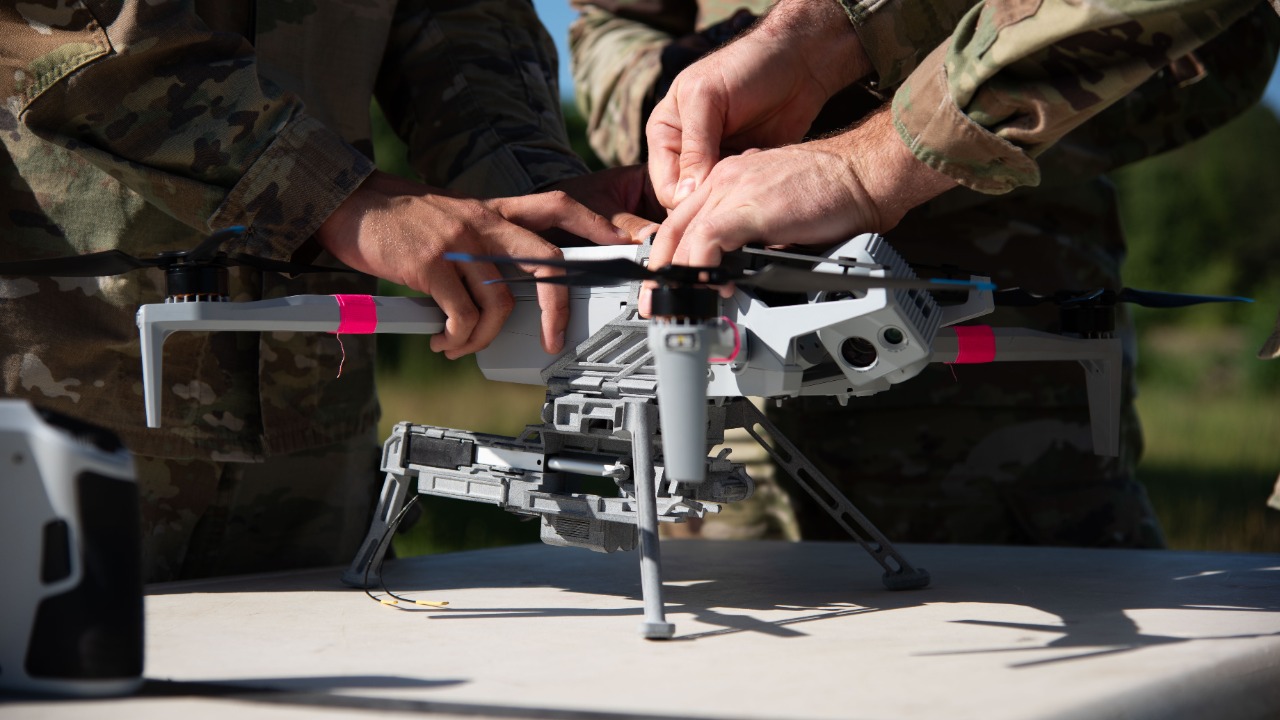
Ukraine’s newest weapon in its drone-heavy war is not a munition but a software layer that promises something close to omniscience over the battlefield. Mission Control, unveiled in KYIV as a unified command app for unmanned systems, aims to stitch together data from the front lines into a single operational picture that commanders can manipulate almost like a strategy game. The ambition is stark: turn fragmented drone skirmishes into a coordinated, data-driven campaign that can outpace Russian adaptation.
That vision sits at the intersection of two powerful trends in Ukraine’s defense effort, the rapid digitization of command and the deliberate gamification of combat incentives. If Mission Control works as advertised, it will not only tighten targeting loops and logistics, it will also hardwire a points-based rewards system into the daily routines of drone crews, raising uncomfortable questions about how far a modern army can borrow from gaming culture without warping its own moral compass.
From scattered feeds to a single pane of glass
Mission Control is designed to solve a basic but crippling problem: drone warfare at scale generates torrents of video, coordinates, and telemetry that often sit in separate apps, radios, and spreadsheets. In KYIV, Ukraine’s digital planners have built the platform to pull those streams into one interface, so a commander can see which units are flying, which targets are being tracked, and which strikes have already been attempted, all in real time. Instead of relying on ad hoc chat groups and voice calls, the system as described turns drone operations into a shared dashboard that can be queried, filtered, and replayed.
Officials describe Mission Control as a first-of-its-kind digital command-and-control system that unifies multiple drone platforms and feeds them into the broader DELTA combat ecosystem, a move that is meant to standardize how data from the front is captured and used. Reporting from KYIV, Ukraine notes that the app is intended to support deeper integration with allies as well, which suggests its architecture is being built with NATO-style interoperability in mind rather than as a closed national tool.
Inside the DELTA ecosystem and real-time command
The technical heart of this shift is DELTA, Ukraine’s digital battle management system that already aggregates sensor data, troop positions, and targeting information. Mission Control plugs directly into that backbone, turning every UAV sortie into a structured data object that can be searched and analyzed later. In practice, that means a drone operator’s video feed and coordinates are no longer just ephemeral images on a tablet, they become part of a living database that planners can mine for patterns in Russian air defenses, logistics routes, or recurring vulnerabilities.
Earlier this year, analyst Sofiia Syngaivska detailed how Mission Control integrates UAV missions into DELTA so that information is generated directly from operational activity rather than being manually re-entered after the fact. That automation matters because it reduces the lag between a drone spotting a target and the wider force being able to act on that intelligence. It also creates a feedback loop where every mission, successful or not, becomes training data for the next wave of operators and engineers.
Gamified killing: points, drones, and morale
What makes Mission Control more than just another command app is how tightly it is wired into Ukraine’s performance-based rewards system for drone units. Under that model, Units upload video proof of confirmed kills to Delta, and at month’s end their total score determines what drones they can select from the defense-tech platform behind the program. In other words, the better a unit performs, the more advanced hardware it can request, turning battlefield success into a kind of in-house loyalty program.
Officials have confirmed that Mission Control feeds directly into this gamification model, effectively automating the scoring process by logging each verified strike as it is recorded in DELTA. Commentary on the moral economy of this system notes that Drones render these dynamics even more visible, especially first-person-view platforms that have become emblematic of the war in Ukraine, since operators watch their targets in intimate detail and then upload footage of successful strikes into DELTA. A recent analysis on gamified war argues that this system risks turning lethal decisions into a competition for better gear, even as it undeniably sharpens unit performance.
Ethics, data hunger, and the risk of losing control
Ukrainian officials are candid that the entire architecture depends on a relentless flow of frontline information. One senior figure put it bluntly, saying that Currently, data from the front lines holds immense value, and that there is no other chance than to harness it fully for survival. In the same account, the official is introduced with the phrase Although Fedorov announced the system’s kickoff just last month, underscoring that the technology is still in its early rollout even as expectations are sky high. That framing, captured in a detailed account of Fedorov’s, hints at the pressure on Ukraine’s digital ministry to turn raw data into battlefield leverage faster than Russia can adapt.
Yet the same sources warn that the biggest vulnerability is not just Russian jamming or hacking but the possibility that operators themselves lose situational awareness inside a gamified interface. One officer is quoted saying, “This is the biggest risk when you don’t control the situation,” before adding that even if the enemy sees which drones Ukraine kills, the priority is to stay ahead of the adaptation curve. That warning, relayed in a detailed interview, suggests that the real ethical hazard is not only dehumanization at a distance but overconfidence in a system that can still be blinded or spoofed. For civilians used to apps that nudge them to walk more steps or watch one more episode, the idea of a war app nudging operators toward more lethal missions should feel uncomfortably familiar.
Allies, AI, and what comes next
Mission Control is also a test case for how far Ukraine can align its digital infrastructure with partners who may one day plug their own drones into the same network. Reporting from Feb notes that the system is being built with deeper integration with allies in mind, which implies that NATO-standard encryption, data formats, and airspace deconfliction rules are being baked in from the start. If that holds, the app could become a template for joint operations where Ukrainian and allied UAVs share a common picture of battlefield conditions and strike effectiveness, a point highlighted in coverage By Katie Livingstone that also notes how Ukrainian service members are already preparing to launch drone interceptors against enemy targets.
Looking ahead, I expect Mission Control to accelerate Ukraine’s move toward AI-assisted targeting, not by handing decisions to algorithms outright but by giving machine-learning tools a richer dataset to analyze. If every mission is logged, scored, and tagged with outcomes, it becomes far easier to train models that can suggest optimal routes, likely ambush points, or decoy patterns, even if humans retain the final say on lethal strikes. At the same time, the more the system succeeds, the more tempting it will be to lean on the points economy as a management tool, which could erode traditional discipline if commanders start chasing metrics instead of strategic effects. That tension, between efficiency and restraint, is likely to define the next phase of Ukraine’s drone war as much as any new airframe or munition.
More from Morning Overview
*This article was researched with the help of AI, with human editors creating the final content.